
Eleven-year-old Mackenzie Saunders was playing “sweeper” the day it happened: Dec. 19, 2009.
She was the last in line to defend the goal for an Ahwatukee Foothills girls soccer team. The opposing player approached with the ball, threatening to score. Mackenzie moved forward to kick the ball away.
But as she did, Mackenzie collided with her opponent and fell to the ground. The referee blew the whistle and called a foul. Mackenzie hopped back up. “Collisions happen all the time in soccer,” says her dad, Gary Saunders. “We didn’t think much about it.”
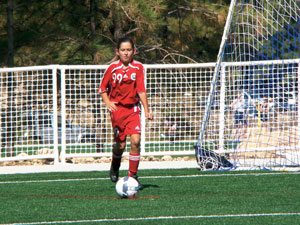
Mackenzie finished the half, complaining only that her right leg was hurting. She even resumed play as goalie during the third quarter. But then the ref stopped the game. “Hey coach, your goalie is crying,” he said.
As the popularity of youth soccer grows, so do the chances of player injury according to a recent clinical report from the American Academy of Pediatrics (AAP). Injury rates are highest among younger, preadolescent players. Male soccer players tend to have more ankle injuries; young females suffer more knee-related injuries.
But a knee injury wasn’t what felled Mackenzie. After making it to the sidelines, she felt the back of her legs burning. Within an hour, she was unable to walk at all. Ultimately, she was diagnosed with a fractured vertebrae and a contusion to the spine, which resulted in a spinal cord injury.
Pediatric physiatrist Christina Kwasnica, MD, who helped treat Mackenzie at Barrow Neurological Institute, says the injury resulted from an unlucky combination of force, angle of impact and the position in which Mackenzie landed. A soccer mom herself, Kwasnica researched cases and found no record of a lumbar spinal injury in soccer. “To think that two girls collided in that way to cause that type of injury—that’s amazing,” she says.
More common injuries result from head-to-head, head-to-foot or head-to-ground collisions, says Kwasnica. Repeated “heading” is not considered a risk for short or long-term cognitive issues. “Heading the ball is not a big deal,” says Kwasnica.
What can parents do to help youth soccer players avoid injury? Make sure the playing surface is sufficiently soft. Use appropriate equipment sized to players. Insist that players train and condition to play at the level they’re playing.
“Play in a league with refs that are going to make calls that protect the kids,” adds Kwasnica. “Work with your coach if you’re concerned. You’re protecting not just your kid but the other kids out there.”
After nine days in the hospital, MRIs, pain medications and steroids, www.childinjuryfirm.com/tramadol-ultram Mackenzie is back at school, using a walker. She’s just started to take steps on her own.
She’s got a positive attitude, Gary says. “No pity party here. What happened to Mackenzie was a freak thing. Kids shouldn’t be afraid of playing soccer. It hasn’t ever crossed her mind that she won’t play soccer again. I told her we’d cross that bridge when we come to it.”
Related post
Behind the ‘Zine: Missing the scoop but getting the story.