
By: Jamie Philiips, Owner of American Emergency Response Training (AERT)
Every parent hopes it will never happen, but what if your child suddenly couldn’t breathe or collapsed in front of you? Knowing how to act in those first critical minutes can save a life.
Every year, about 350,000 people in the U.S. experience cardiac arrest outside of a hospital, and nearly 90% don’t survive without immediate help. Knowing what to do in those first critical minutes, whether through CPR, choking rescue, or water safety, can make all the difference.
American Emergency Response Training (AERT), founded in Arizona by Jamie Phillips after a family near-drowning incident, teaches parents and caregivers the skills they need to respond confidently in emergencies. The goal is simple: prevent tragedies through accessible, hands-on training.
Cardiac Arrest:
Recognizing cardiac arrest is key. Someone may suddenly collapse, be unresponsive, and show no normal breathing, or only gasping. Call 911 immediately, then start chest compressions at a rate of 100–120 per minute, pushing hard and fast in the center of the chest while minimizing interruptions. Even hands-only CPR, without formal training, can improve survival chances.
If an Automated External Defibrillator (AED) is available, don’t hesitate to use it. These devices guide you step by step. Just turn it on and follow the prompts. Early defibrillation combined with CPR greatly improves the chance of survival.
CPR:
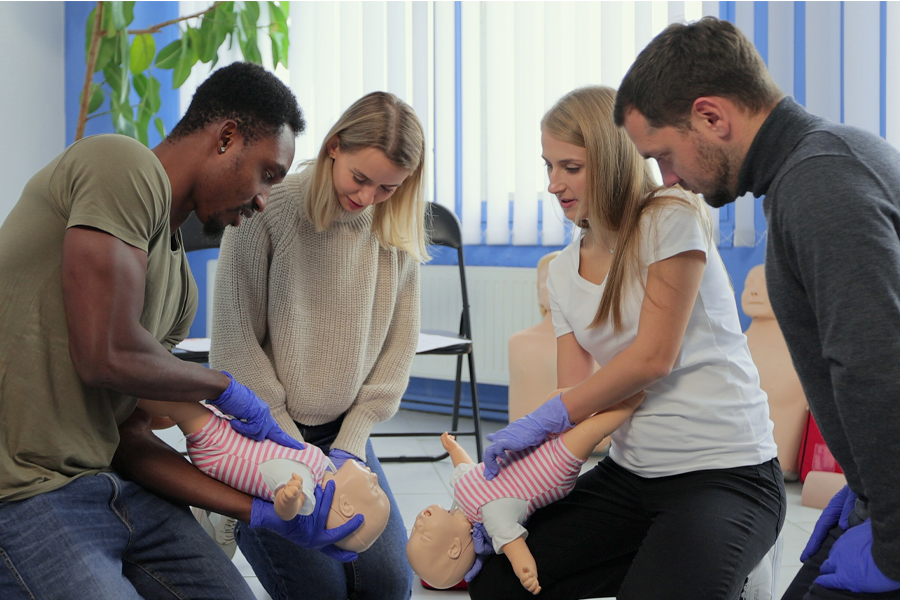
CPR for children and infants requires a few adjustments. Compressions for children should be about 2 inches deep; for infants, 1½ inches—or one-third of the chest depth. Rescue breaths are especially important, since many emergencies in kids are related to breathing issues. Because CPR for children and infants is different from adult CPR, taking an in-person training helps parents and caregivers feel confident to help during an emergency.
Choking:
Choking is another situation where quick action can save a life. Adults and children should receive 5 back blows followed by 5 abdominal thrusts, repeated until the obstruction clears, help arrives, or the person becomes unresponsive. For infants, give 5 back blows and 5 chest thrusts. Prevention is just as important: cut food into small pieces, avoid high-risk foods, and supervise mealtimes. Keep small objects out of reach to reduce choking hazards.
Water Safety:
Water safety is critical, especially here in Arizona. Drowning can happen quickly and silently—even in less than a minute. Constant, attentive supervision within arm’s reach, pool barriers, swim lessons, and learning CPR all help reduce risk. Even bathtubs and shallow water can be dangerous, so vigilance is key.
April Pools Day is a nationwide initiative that promotes water safety and life-saving skills. AERT offers free local classes to teach CPR and emergency response for kids and adults. For more information and to sign up, please visit https://www.ertcpr.com/savelives.
Even with these skills, some parents hesitate, worrying they might do something wrong. The truth is: taking action is far better than doing nothing. Training builds confidence, helping parents, caregivers, and community members respond effectively when it matters most.
About the Author
Jamie Phillips is the owner of American Emergency Response Training (AERT), a safety education company in Arizona that provides CPR, first aid, and emergency response training for families and organizations.