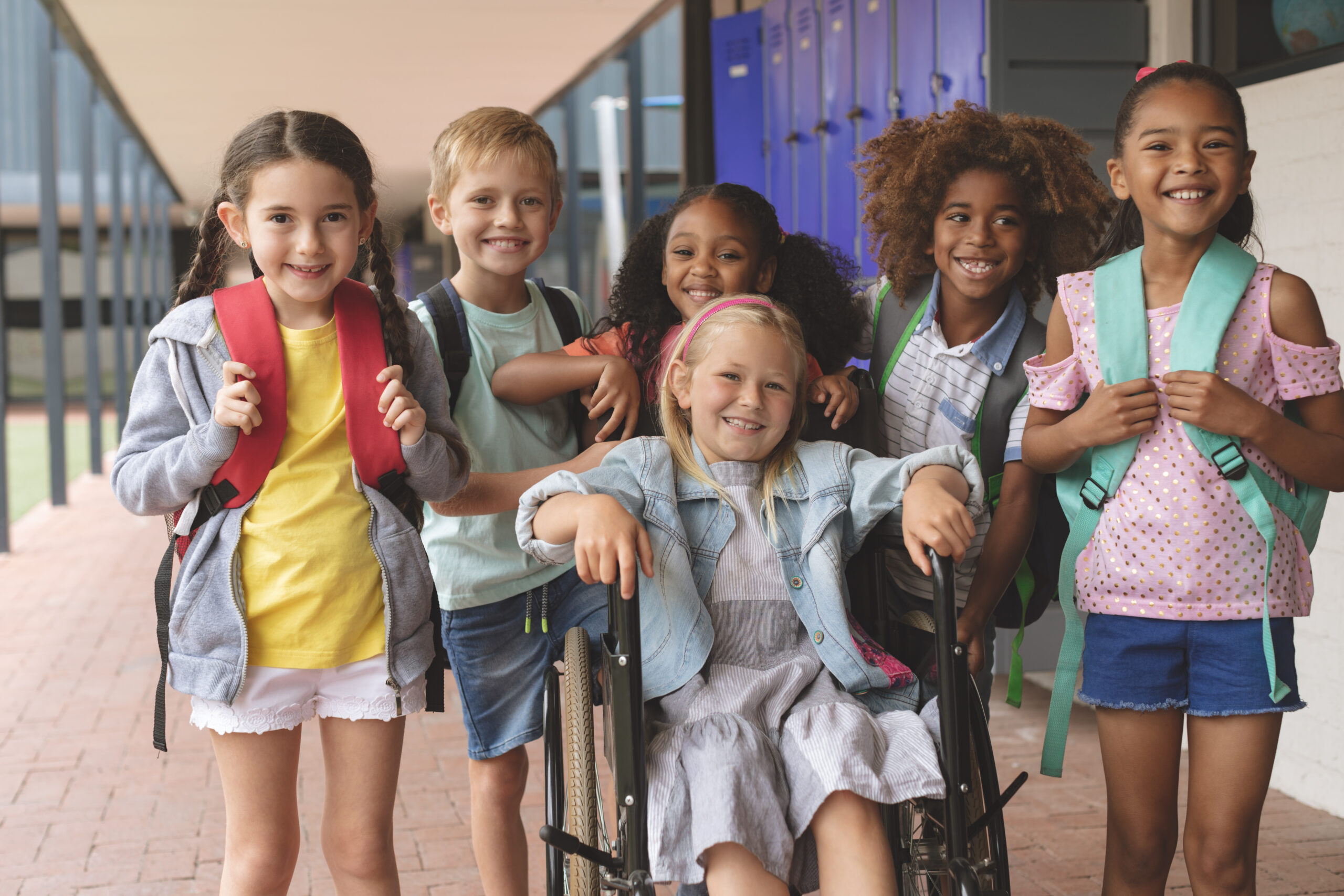
Children are naturally curious – it is one of their best attributes! They notice differences in how people look, communicate, move, and interact with the world. These observations can often lead to questions and create valuable opportunities for parents and caregivers to teach their kiddos about disabilities and inclusion. When children learn from an early age that everyone experiences the world differently, they are more likely to become compassionate friends, classmates, and community members.
Why Start Early?
Young children are not born with bias—they learn from the world around them. When parents openly discuss differences instead of avoiding the topic, children understand that disabilities and neurodiversity are simply part of the human experience.
Early conversations help children:
- Build empathy and understanding
- Feel comfortable asking respectful questions
- Reduce misconceptions about disabilities
- Develop confidence interacting with kids of all abilities
These lessons create a foundation for inclusion that can last a lifetime!
Explaining Differences in Simple, Honest Ways
Children don’t need complicated medical explanations. They need honest, age-appropriate language that focuses on understanding rather than labels.
For example, parents might say:
- “Everyone’s brain works a little differently, and that’s okay.”
- “Some people use wheelchairs to help them get around, just like some people wear glasses to help them see.”
- “Your friend with autism may communicate differently or enjoy different activities, but they still like making friends.”
- “Someone with ADHD may have extra energy or find it harder to focus, but they also have many unique strengths.”
The goal is to remember we all have differences, and we all deserve kindness and respect.
Encouraging Meaningful Friendships
Children are great at naturally connecting when given the opportunity. Parents can help create inclusive friendships by encouraging shared experiences instead of focusing on differences.
Simple ways to support and model inclusion include:
- Using respectful, person-first language
- Encouraging children to invite everyone to play
- Celebrating each child’s unique interests and strengths
- Teaching children to ask, “How can I help?” instead of making assumptions
- Reading books and watching shows that feature diverse characters and abilities
When children see inclusion modeled at home, it becomes second nature at school, on the playground, and in the community!
The Words We Choose Matter
Children pay close attention to how adults talk about others. Using respectful, person-centered language teaches children that differences are something to understand—not something to fear or judge.
It’s also okay for parents to admit when they don’t know the answer to a child’s question. Saying, “That’s a great question. Let’s learn about it together,” models curiosity and reinforces that we are all learning, all of the time.
Inclusion begins with simple conversations at home that teach children to see differences not as barriers, but as part of what makes each person unique. As Mister Rogers famously said, “I like you just the way you are.” It’s a simple message with a profound truth: every person belongs, just as they are.
About the Author
Melanie Isaacs is the founder of Pal Experiences, a nonprofit organization dedicated to helping businesses create more accessible and inclusive experiences for individuals with autism and related developmental disabilities. Through custom video social stories, assistive communication tools, and inclusive training resources, Pal Experiences partners with museums, attractions, restaurants, sporting events, and more to ensure every family feels welcome. Learn more at palexperiences.org.