 Looking for a way to get your child excited about reading?
The answer may already be curled up at your feet.
Whether it’s the family dog stretched across the living room floor or the cat curled up on the couch, pets create a calm, judgment-free audience for young readers. Household pets don’t interrupt, correct mistakes or expect perfect pronunciation. Instead, they simply listen, giving children a chance to relax, practice and discover that reading can be fun.
Try It at Home
Families don’t need a specially trained animal to make reading more fun. Try these simple tips:
- Choose a book. Let your child choose a story that matches their interests and reading level. The goal is to make reading feel enjoyable, not like homework.
- Find a space. Create a cozy reading spot where your child and pet can relax together.
- Encourage connection. Ask your child to read with expression, show their pet the pictures and explain what’s happening in the story. These simple interactions can help transform reading practice into a conversation rather than a chore.
- Adapt for your pet. If the pet wanders across the room, ask your child to read a little louder so their furry listener can hear what happens next.
- Avoid correcting mistakes. Confidence grows when children are given the freedom to work through unfamiliar words on their own without worrying about getting every word right.
No dog or cat? That’s okay. Rabbits, hamsters, fish, lizards or even a favorite stuffed animal can all be attentive listeners. The goal isn’t the species of audience – it’s creating a fun and safe space where kids feel comfortable reading out loud.
It Works in Schools, Too
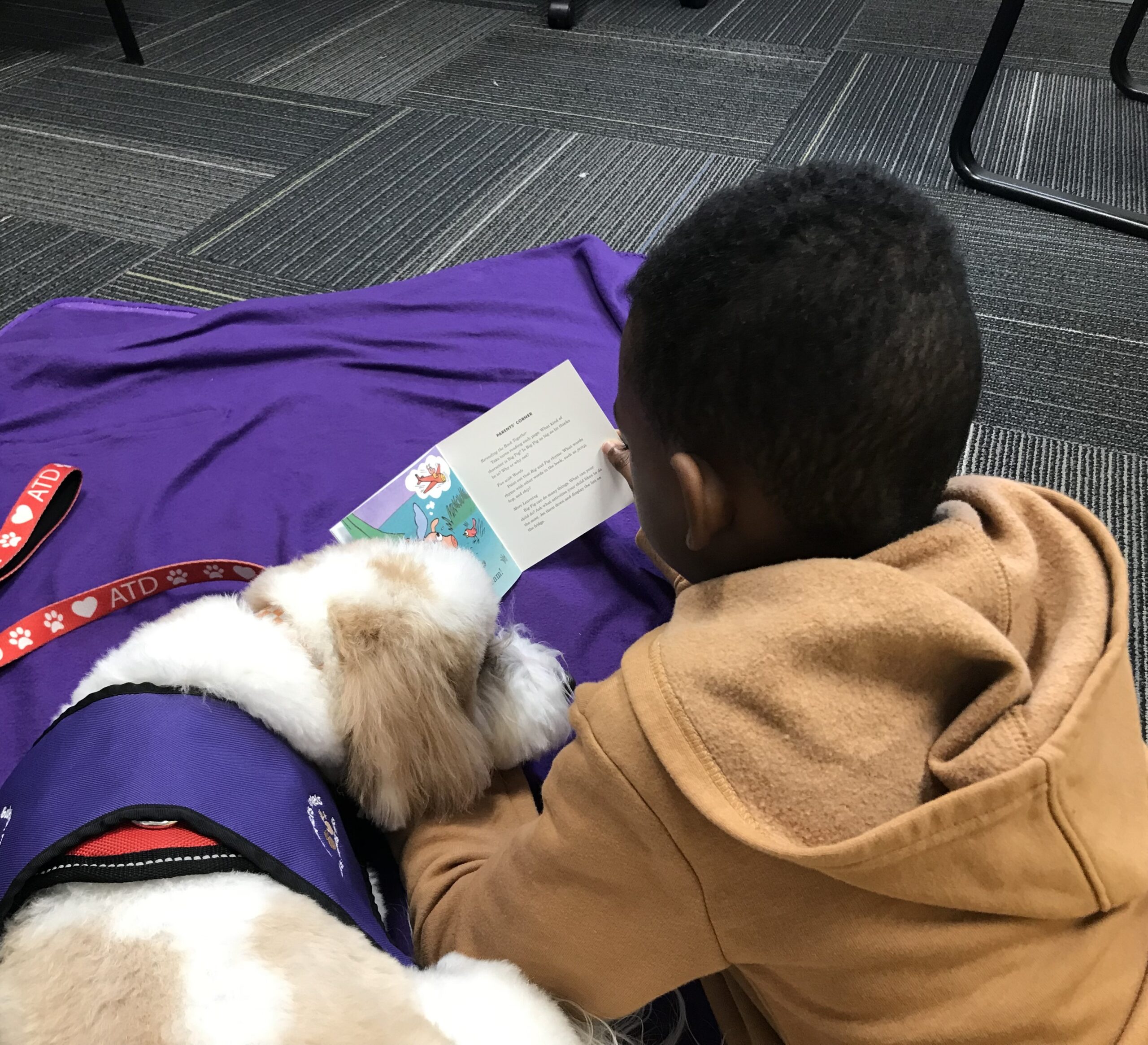
This simple idea is the foundation of the Animals, Books & Children (ABC) program at nonprofit Paws for Youth. Throughout the school year, trained therapy dog teams visit schools throughout the Phoenix and Tucson areas. Children who have experienced trauma and are falling behind in reading are paired with a patient, encouraging, four-legged listener who returns week after week.
Many children begin the program feeling nervous. Over time, however, teachers report many students growing confident, becoming more willing to participate in class and volunteering to read aloud. One child even told program staff that the only reason he came to school some days was because he knew he would get to see, pet and read to the therapy dog.
Why It Makes a Difference
The benefits often extend beyond improving reading skills.
Sharing a story with a pet can help children slow down, focus and establish a consistent routine. Without the pressure of reading for a grade or completing an assignment, many children feel more comfortable taking their time and enjoying the story.
Those moments matter. When children begin to see reading as enjoyable rather than stressful, they’re often more motivated to keep turning the page. And the self-assurance they develop follows them into the classroom.
Helping children become confident readers doesn’t always require extra homework or expensive programs. Sometimes all it takes is a good book, a quiet place to sit and a loyal companion who’s happy to listen from beginning to end.
About the Author
Cara Kiggins is chief programs officer at Paws for Youth, an Arizona nonprofit that partners therapy animals with children to promote emotional wellness, literacy and resilience. Contact her at 602-266-0875.