 I can still remember the night before the first day of school when I was a kid. Lying in bed, too excited—or too nervous—to fall asleep. Picking out the perfect first-day outfit and hoping everyone else would think it was cool. Organizing my brand-new school supplies just right inside my backpack. Wondering who would be in my class, where I’d sit at lunch, and whether I’d fit in.
Looking back now, none of those things really mattered. I couldn’t tell you what I wore on the first day of fourth grade or which Lisa Frank pencil case I just had to have. But at the time? They felt like the biggest things in the world.
Now I’m the parent, and I get to watch those same butterflies show up in my own kids—just in very different ways.
In our house this year, everyone seems to have a different relationship with the start of school.
Our 5-year-old is getting ready for kindergarten. He tells me he’s excited, but if you listen closely to his questions, you can hear the nerves underneath. Will he know where to go? Will he make friends? What if he misses home?
Our second grader isn’t nervous at all—he simply doesn’t want summer to end. He’s loved every minute of sleeping in, late-night s’mores, random weekday adventures, and not having to rush anywhere. If he had it his way, we’d just keep doing summer forever.
Our preschooler is blissfully unaware of what “starting school” really means. He proudly tells everyone he’s excited to go, but I don’t think he’s quite connected that excitement with the fact that Mom won’t be staying and that he’ll be getting on the bus by himself.
Then there’s our eighth grader. He acts like he’s got everything under control, but I know him well enough to recognize the butterflies hiding behind the cool attitude. This is his last year of middle school before high school. That’s a big deal, even if he’d never admit it out loud. For one year, he’s the big fish in the pond before becoming the youngest again in high school.
Watching all four of them has reminded me that butterflies don’t look the same on every child.
Some kids ask a hundred questions. Some become extra emotional over things that normally wouldn’t bother them. Some complain about stomachaches or headaches. Others insist they’re perfectly fine when they’re quietly processing everything inside. And then there are kids like my second grader, whose worries come out looking more like resistance than anxiety.
As parents, it’s easy to jump into fixing mode. We want to convince our kids there’s nothing to worry about or promise them they’ll have the best year ever. While reassurance is important, I’ve learned that trying to talk them out of their feelings rarely works.
Instead, I’ve started reminding my kids that feeling nervous usually means they’re about to do something new. We all get butterflies before big moments. Adults do, too. I still get them before meeting a new client, making a big decision, or trying something outside my comfort zone. Butterflies aren’t a sign that something is wrong—they’re often a sign that we’re growing. The kids also get a kick out of the idea of actual butterflies flying around in their stomachs, which somehow makes those feelings seem a little less scary.
One thing that has helped our family is talking about feelings before they become overwhelming. Instead of asking, “Are you nervous?” I’ll ask, “What’s something you’re excited about, and what’s something you’re wondering about?” It opens the door for conversation without making anxiety the focus.
We’ve also learned that a little preparation goes a long way. Don’t skip Back-to-School Night if your school offers one. Seeing the classroom, finding their desk, meeting the teacher, and recognizing a few familiar faces can make the first day feel much less intimidating.
We also make a point to have a special breakfast—even if it’s just canned cinnamon rolls. Talking through the morning routine, laying clothes out the night before, and letting the kids help pack their backpacks gives them a sense of ownership over what’s coming. The more predictable the first day feels, the less intimidating it becomes.
I also try not to put too much pressure on that first day. They don’t have to come home with a new best friend or love every minute of school. Sometimes success simply looks like walking through the classroom door, making it through the day, and realizing, “Hey, I can do this.”
When they get home, I skip the usual, “How was your day?” because it almost always gets me a one-word answer. Instead, I ask things like, “What made you laugh today?” “What surprised you?” or “What was the best part of your day?” Those questions usually lead to much better conversations.
As much as I love summer, I also know our family thrives with routine. Bedtimes become more predictable. Meals happen at regular times. Everyone settles back into seeing friends, learning new things, and having a little more structure. There is something comforting about that rhythm, even if getting there comes with a few butterflies.
If your child is feeling nervous this week—or if they’re pretending not to be—know they’re not alone. Looking around my own house, I have one who’s excited, one who’s resistant, one who has no idea what’s coming, and one who’s trying very hard to act like he’s too cool to care.
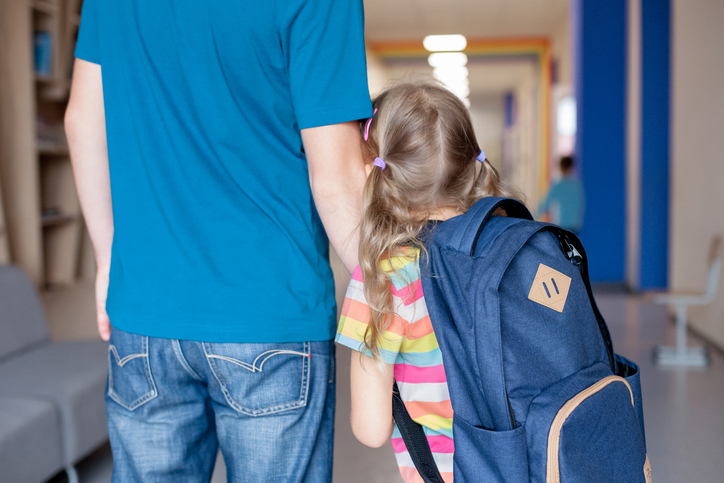
Instead of telling our kids they don’t need to be nervous, maybe we should remind them that butterflies are simply their body’s way of saying, “This is something new.” Before long, they’ll know where to hang their backpack, they’ll recognize their classmates, and school will become just another part of their routine. The butterflies never really go away—we just get older and learn they’re often a sign we’re doing something worth doing. Maybe that’s one of the greatest lessons we can teach our kids: courage isn’t about never feeling nervous. It’s about taking a deep breath, putting on your backpack, and walking through the school doors anyway.