“Sticks and stones may break my bones, but names will never hurt me.”
Plenty of parents grew up hearing the nursery rhyme meant to lessen the impact of verbal taunts. Back then, teasing happened face to face or via scribbled notes passed around a classroom.
Nowadays, name-calling travels in a nanosecond online and through social media. Few deny the power of words to cause serious harm. The devastating effects, including suicide, are widely reported in the media.
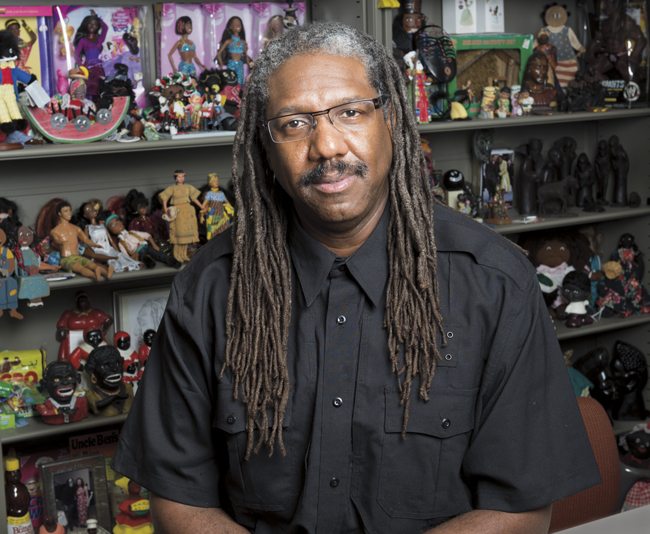
Neal Lester, director of Project Humanities at Arizona State University , grew concerned about one word in particular after he saw a spike several years ago in online use of what is called the “N-word.”
The N-word: Past and present
The term N-word refers to the word “nigger,” a racial epithet that was commonly used by whites to describe blacks during American historical periods marked by slavery and segregation.
Its use continues today, sometimes by youth who think changing the spelling to “nigga” or “niggah” makes the word a term of endearment instead of an epithet, especially when used by blacks referring to other blacks.
Lester says it’s impossible to separate the word—regardless of the spelling—from its historical affiliation with hatred and violence against blacks.
“I’m concerned that it’s being used in a carefree way with no connection to history,” says Lester. “The N-word is so inflammatory precisely because it has never been able to get rid of the historical…baggage that continues to connect it with acts of violence and intimidation of black people.”
Lester created a college course about the word’s origin and usage, which evolved into the presentation he now makes to middle schools, high schools and community groups in Arizona and other states.
Youth are hearing the N-word in music, seeing it online and using it among friends, says Lester. The N-word is used in rap and hip hop music performed by both black and white artists who appeal to kids of different races. White singers, including John Mayer and Justin Bieber, have used it in conversation.
The N-word is used by and against kids with different skin colors. But Lester stresses that it’s an epithet when used to address anyone—not only a black person.
Without more than a cursory knowledge of the historical context, some think racism is a thing of the past and assume that the N-word has moved from racial epithet to harmless moniker.
But Lester says the history endures and he urges students to become well-informed instead of using words merely because they are prevalent in popular culture.
“No matter the spelling,” says Lester, “the root ‘nig’ is still present and loaded with heavy historical baggage that 30 years of hip hop cannot make go away.”
Talking to students about the N-word
Recently Lester shared his “Straight Talk about the N-word” presentation with high school students at ASU Preparatory Academy, a K-12 charter school in Phoenix that often invites guest speakers to campus.
The presentation included images of advertisements, children’s books and other materials that use the word in derogatory and demeaning ways. The book Ten Little Nigger Boys by Nora Case imagines black boys dying or disappearing in different ways until none remains.
Lester also talked about how the N-word became a derogatory term, says Josephine Peyton Marsh, ASU professor in residence at the academy. Students learned that songs still taught today, such as “Shoo Fly, Don’t Bother Me” and “Oh! Susanna,” began as minstrel songs sung by whites to mock blacks. Additional verses for each contain the N-word.
Lester notes that the N-word has been connected with Jim Crow segregation (which prevented blacks from using whites-only facilities), signs used in protests against racial integration during the 1950s and 1960s and the 1981 Ku Klux Klan killing of Michael Donald in Alabama.
Seeing concrete examples of hatred affiliated with the N-word—and being reminded of the word’s use by those who committed violent acts—provides historical context that changes the way students think about the word.
“Language and words have power,” says Lester. Instead of telling students what they should or shouldn’t say, he offers information and encourages students to think about the ways they use language. “You have the power not to say it,” he tells them of the N-word.
What high schoolers are saying
After the presentation, Steve Dershimer, an English teacher at ASU Preparatory Academy, gathered four students to talk with me in the school library about their experiences with the N-word. The 16- and 17-year-olds from Phoenix preferred to share only their first names. They were reflective and frank.
“I hear people say it all the time,” said Zakyra. “They know it’s disrespectful, but they don’t know why.”
“A lot of my friends say it,” Jessica told me. “They use it to fit in.”
“It’s a social norm where I come from,” said Kahlil. A family member told him the spelling “nigger” was used for slaves, whereas the “nigga” variation is a term of endearment.
After learning more about the word’s history, Kahlil agreed with Lester’s position that both are terms of enslavement.
Marsh says that Lester’s presentation helped Josh to mentor two elementary-age children who had an altercation involving the N-word.
Josh explained it this way: “It all comes down to morals and respect.”

Community and online resources
ASU Project Humanities
Contact the center, located on ASU’s Tempe campus and headed by Neal Lester, to schedule a “Straight Talk About the N-word” presentation. In some cases, presentations are free of charge.
humanities.asu.edu or 480-727-7030.
Teaching Tolerance
A program of the Southern Poverty Law Center in Alabama, which helps educators and others address bullying, hate speech and more. Find the Speak Up: Responding to Everyday Bigotry handbook online. Lester is currently adapting his “N-word” work to a toolkit for the center. Several of his writings on the topic are currently available on the website. teachingtolerance.org.
What parents should know
- Most kids hear the N-word. It’s not restricted to a particular race or socio-economic status. Don’t assume your kids are never exposed to it.
- The N-word is never a term of endearment. Some assume changing the word to end with “a” or “ah” instead of “er” changes the meaning, but its historical affiliation with acts of violence such as lynching remains.
What parents can do
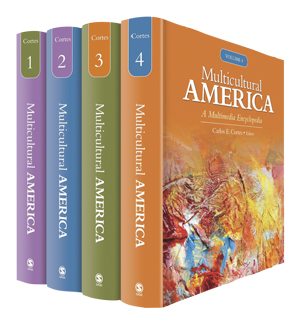
- Educate yourself. Learn more about the history and meaning of the N-word. You’ll find several books, articles and video of Neal Lester by searching online. Exploring the history of segregation in America is a good place to start, or you can read an essay by Lester in Carlos E. Cortes’ Multicultural America: A Multimedia Encyclopedia (2013).
- Be a good role model. Don’t use words you wouldn’t want your kids to use.
- Pay attention. Know what your kids are listening to and doing on social media. Listen to them talk when they’re around friends.
- Discuss the N-word. You can’t prevent your kids from hearing it, but you can share your concerns about the word, invite their thoughts about its history and remind them that they have the power not to say the N-word, even if others are using it.
- Talk with your child’s school. Ask how the topic is being addressed and share resources with your child’s teacher.