
A Closer Look at This Small-Scale Education Model
As education continues to evolve, many parents are exploring nontraditional options that offer greater flexibility and a more personalized approach. One such model is the microschool—a growing movement that combines elements of homeschooling, private school, and small-group learning.
To better understand how microschools work and why some families are turning to them, we spoke with Kelly Smith, founder of Prenda, a microschool network based in Mesa, that supports thousands of families and educators across the country.
What Is a Microschool?
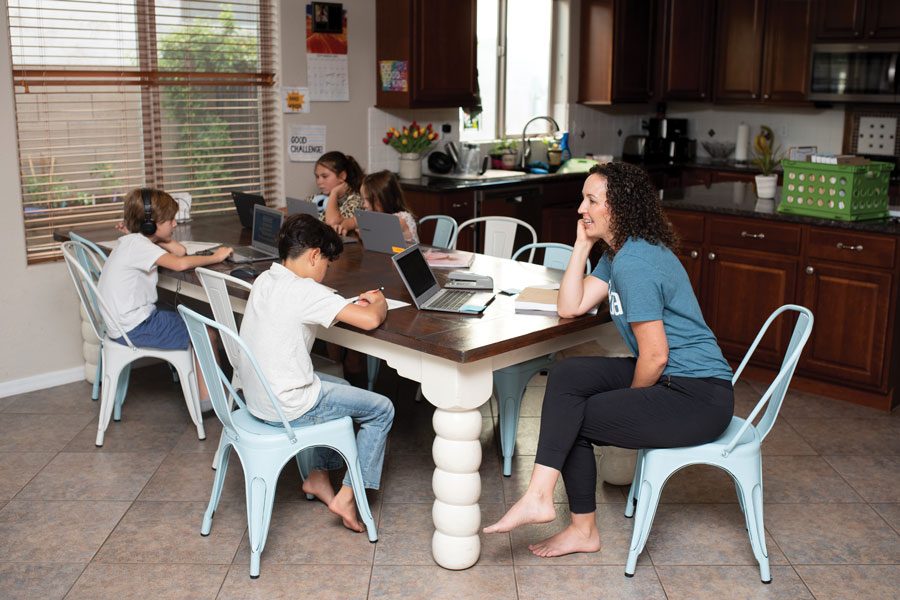
“Microschools are like the one-room schoolhouses of the 21st century,” Smith explains. “They’re small—usually 5 to 10 kids—and they meet in homes, libraries, community centers, or any other safe, welcoming space.”
Unlike traditional classrooms, microschools are typically led by a “Guide” rather than a certified teacher.
While technically considered private schools, in states like Arizona, families can receive funding through education savings accounts (ESAs) to cover tuition.
“The ESA program here in Arizona provides $7,000+ scholarships so parents can sign up for microschools with zero out-of-pocket cost,” Smith adds.
How Microschools Compare to Other Education Models?
According to Smith, microschools offer a unique blend of benefits. “They combine the flexibility of homeschooling with the structure of a school, the resources of online learning with the human connection of in-person learning.”
While technology often plays a supporting role in academics, these schools prioritize face-to-face interaction and project-based learning. They differ from virtual schools in that students learn in-person in a group setting, and they differ from traditional private schools by being smaller, more flexible, and often more community-based.
What Does a Typical Day Look Like?
A typical day in a Prenda microschool follows a learning model with four distinct phases:
- Connect Mode: Students begin with a group check-in, focusing on communication, goal setting, and social-emotional development.
- Conquer Mode: Students work independently through reading, writing, and math using digital and offline tools.
- Collaborate Mode: Small-group projects or discussions on science, logic, or history.
- Create Mode: Students develop their own projects—anything from building robots to writing plays or launching small businesses.
What Ages Are Best Suited for Microschools?
Most microschools serve students in Kindergarten through 8th grade, though some models vary. “The small-group model really shines in those elementary and middle years—it’s a formative time for identity, confidence, and curiosity,” says Smith.
Why Parents Are Considering Microschools?
Parents choose microschools for various reasons including:
- Personalized attention
- Smaller class sizes
- Flexibility in learning pace
Smith notes that many families report noticeable differences in their child’s motivation and emotional well-being after switching.
“We hear stories all the time—kids who were bored, anxious, disengaged, or falling behind in traditional school, who suddenly light up in a microschool,” he shares.
What Are the Benefits?
Microschools emphasize autonomy and student-driven learning. “Microschools give kids agency—they own their learning,” Smith says. “They get deep connection with a guide who knows them and peers who support them. And they find purpose—preparing them for life and not just passing tests.”
Bottom Line:
For families exploring alternatives to the traditional school system, microschools offer one potential path—particularly for children who thrive in smaller, more customized environments.
“Every child is capable of becoming a powerful learner,” says Smith. “Our job as adults is to unleash that power—not manage it, not contain it, but nurture it.”
For more information on Prenda, visit prenda.com