

With kids back to school, they’ll be sharing more than pencils and playground time—skin infections can spread just as quickly as a cold. Conditions like lice, impetigo and hand-foot-and-mouth disease are common in classrooms, sports teams, and after-school activities. But the good news is that with a little know-how, you can spot the signs early, prevent them from spreading, and keep your child healthy and confident through the school year.
Here’s what the American Academy of Pediatrics (AAP) recommends:
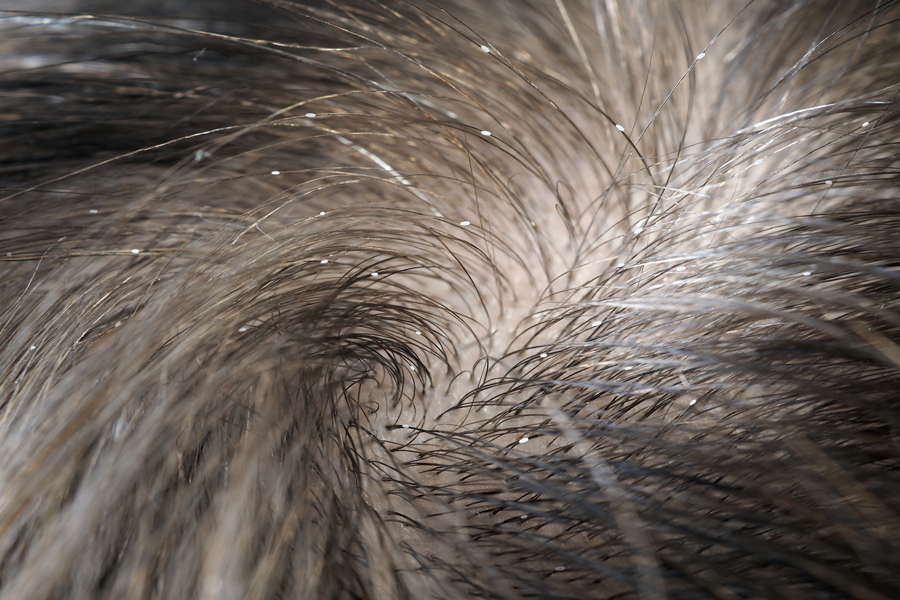
Head Lice 101: Spotting, Treating, and Preventing Classroom Outbreaks
- What to look for: Itchy scalp, small white eggs (nits) stuck to hair close to the scalp, and occasionally live lice crawling.
- What to do: Treat with an FDA-approved medicated shampoo or lotion, and use a fine-toothed comb to remove nits. Wash pillowcases and recently used hats, but you do not need to deep clean your home.
- School policy (AAP): Children should not be kept out of school once treatment has started. ‘No-nit’ policies are discouraged.
- Prevention tip: Teach kids to avoid head-to-head contact, especially during play.
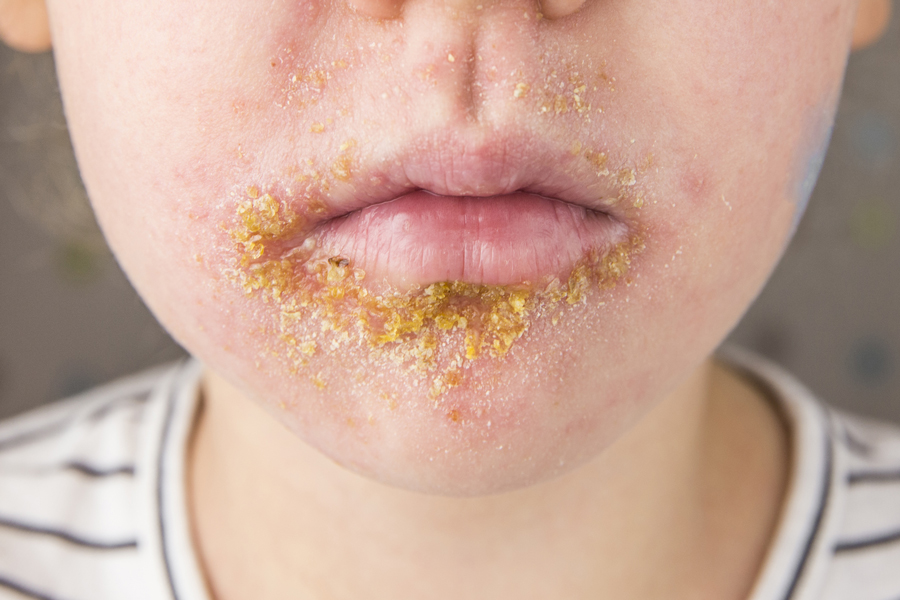
Impetigo: How to Recognize and Stop This Contagious Rash
- What to look for: Red sores or blisters that break open and form a honey-colored crust, often around the nose, mouth, or arms.
- What to do: Your pediatrician may prescribe topical or oral antibiotics. Keep fingernails trimmed and encourage frequent handwashing to reduce spread.
- School policy (AAP): Children may return to school 24 hours after starting antibiotics, as long as sores can be covered.
- Prevention tip: Do not share towels, washcloths, or personal items.
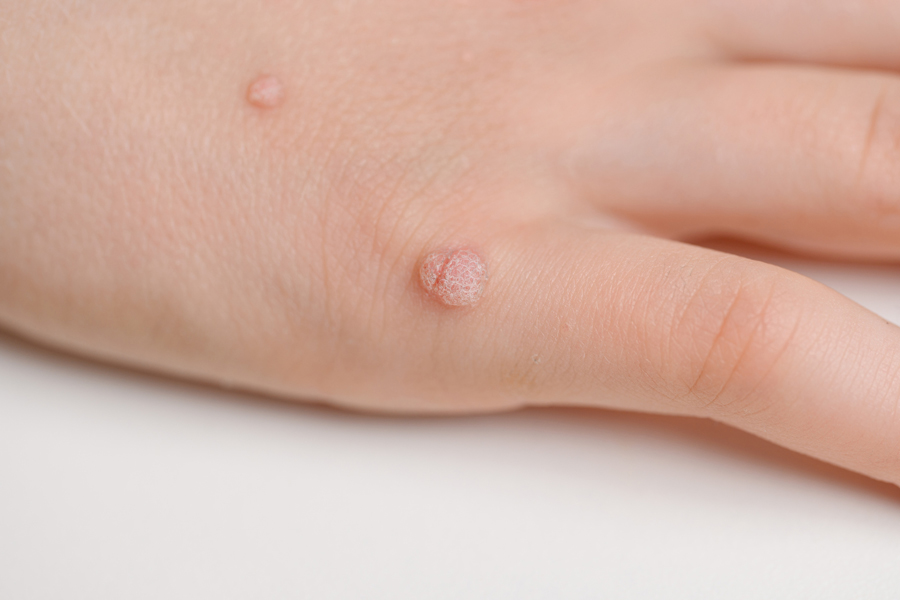
Warts & Molluscum: Why They Spread and How to Protect Your Child
- What to look for: Warts: Rough bumps, most common on hands and feet. Molluscum: Smooth, dome-shaped bumps with a central dimple.
- What to do: Both are viral, harmless, and often go away on their own. Treatment may be offered if lesions spread, itch, or cause embarrassment. Covering lesions helps limit spread.
- School policy (AAP): Children with warts or molluscum should not be excluded from school.
- Prevention tip: Encourage kids not to pick or scratch at bumps, and use flip-flops in shared showers or pool areas.
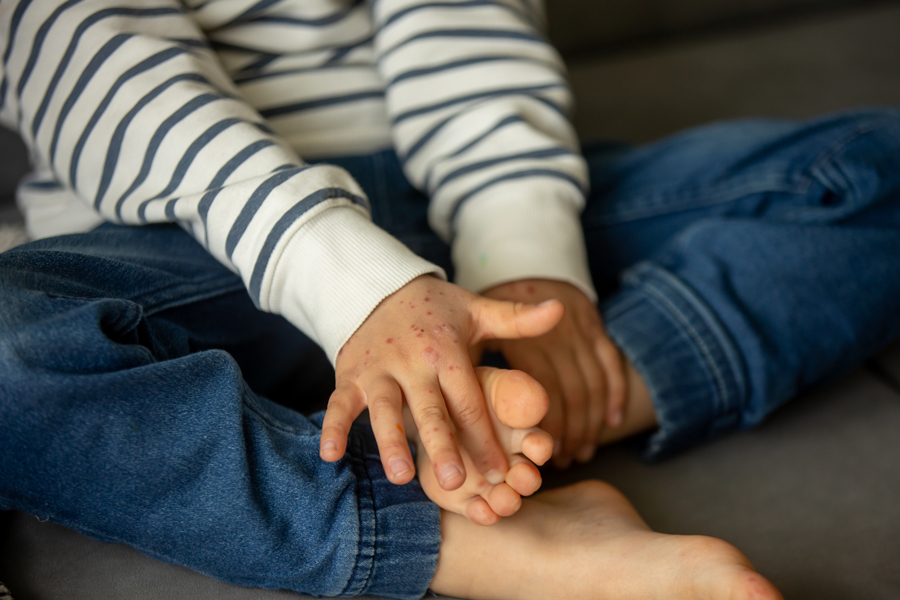
Hand-Foot-and-Mouth Disease: Skin Rash Signs and Care Tips
- What to look for: Fever, sore throat, painful mouth sores, and a rash with red spots or blisters on hands, feet, and sometimes buttocks.
- What to do: There’s no specific treatment. Provide comfort care—fluids, cold foods like popsicles, and fever reducers (acetaminophen or ibuprofen) as needed.
- School policy (AAP): Keep children home until they are fever-free and feel well enough to participate, even if the rash is still visible.
- Prevention tip: Good handwashing is the best defense. Disinfect high-touch surfaces and remind kids to cover coughs and sneezes.
Bottom Line from Your Pediatrician
The AAP emphasizes that most infectious skin conditions in childhood are mild, short-lived, and do not require long school absences. You can help by recognizing the signs early, following treatment recommendations, and encouraging healthy habits like handwashing and not sharing personal items. With these steps, you can keep your child comfortable while reducing the spread of germs in classrooms.
About the Author
Jessica Wright, MD, is a pediatric resident at Diamond Children’s Medical Center in Tucson, with a growing international profile in pediatric dermatology. She has managed a wide spectrum of pediatric conditions, including complex dermatologic diseases, and has authored case reports and research contributions that highlight rare and challenging presentations in children. Her long-term goal is to pursue subspecialty training in pediatric dermatology and allergy, with a focus on integrating clinical excellence, international collaboration, and scholarly research to improve outcomes for children worldwide.