
 From silly dinner table games to small acts of kindness, these simple gratitude traditions help kids of all ages appreciate the little things.
Thanksgiving is a natural time to talk to our kids about gratitude. We gather around the table, ask everyone what they’re thankful for, and inevitably someone says “pizza,” “Minecraft,” or “my toys.” And really, those are perfectly good answers for children.
But gratitude is about more than coming up with something to say before Thanksgiving dinner. It’s about noticing the good things in our everyday lives, appreciating the people around us, and recognizing that even small acts of kindness can make a difference.
Of course, teaching gratitude to a preschooler looks a little different than teaching it to a teenager. Little ones might be thankful for their favorite stuffed animal, while older kids can begin to understand the time, effort and sacrifices that go into the things they enjoy.
The good news? You don’t need elaborate crafts, expensive supplies or another thing to add to your already busy November calendar. These seven simple gratitude activities can fit into ordinary family dinners, car rides and bedtime routines.
1. Make a Thankful Tablecloth
Who says kids can’t draw on the table? Cover your dining table with kraft paper, butcher paper or a plain paper tablecloth and set out some washable markers or crayons. Throughout November, encourage everyone to write or draw something they’re thankful for.
Younger kids can draw pictures of their favorite people, pets or toys. Older kids can write about experiences, friendships or people who have made a difference in their lives.
Leave the tablecloth out for several dinners and watch it fill up. By Thanksgiving, you’ll have a colorful reminder of all the little things your family appreciates.
Make it meaningful: Encourage older kids to go beyond naming things. Instead of simply writing “my teacher,” ask what their teacher does that makes them grateful.
2. Play the Gratitude Alphabet Game
This one requires absolutely no preparation, which makes it perfect for busy weeknights or long car rides. Start with the letter A and take turns naming something you’re thankful for that begins with each letter of the alphabet.
A is for apples. B is for brothers. C is for cookies. You get the idea!
Little kids will love coming up with silly answers, and you might be surprised by how creative everyone gets when you reach letters like Q, X and Z.
For younger children, work through just a handful of letters at a time. Older kids can challenge themselves to come up with answers that aren’t material possessions.
Make it meaningful: Once you’ve finished, ask everyone to name something they appreciate that money can’t buy. Think friendships, laughter, good health or time spent together.
3. Have a Compliment Dinner
Sometimes the people we appreciate most are the ones we forget to thank. Choose one dinner this month when everyone has to share something they appreciate about another family member.
It could be as simple as “Thanks for helping me find my shoes this morning” or “I like when you play basketball with me.”
For younger children, offer prompts like “I love when you…” or “Thank you for…”
Older kids can be encouraged to notice the things that often go unrecognized, like a sibling helping with homework, a parent making dinner or someone taking care of a younger brother or sister.
And yes, the compliments might start out a little silly. That’s part of the fun!
Make it meaningful: Challenge everyone to give a specific compliment rather than something general. “You’re nice” is sweet, but “I appreciate how you helped me when I was having a hard day” carries a little more weight.
4. Start a Secret Thank-You Mission
Turn gratitude into a little family mystery! Have everyone draw a family member’s name from a bowl. Their mission is to secretly do something kind for that person before the next family dinner.
Maybe they make someone’s bed, help with a chore, leave a sweet note or let a sibling choose the movie without complaining. At dinner the following night, everyone gets to guess who their secret helper was.
For younger kids, parents can help brainstorm simple acts of kindness. Older kids can take on more thoughtful gestures, especially ones that require giving up a little of their own time.
Make it meaningful: Talk about how showing appreciation doesn’t always require buying something. Sometimes the most meaningful gifts are our time, attention and willingness to help.
5. Try Rose, Thorn and Bud at Dinner
Gratitude doesn’t mean pretending everything is wonderful all the time.
In fact, helping kids recognize the good in an otherwise difficult day can be one of the most valuable lessons we teach them.
At dinner, have everyone share three things:
- Rose: Something good that happened today.
- Thorn: Something difficult, frustrating or disappointing.
- Bud: Something they’re looking forward to.
Maybe your child’s rose was getting to sit with a friend at lunch, their thorn was a difficult math test, and their bud is an upcoming birthday party.
For younger kids, simplify it to sharing one happy thing and one hard thing about their day.
Make it meaningful: Remind older kids that it’s possible to feel grateful and disappointed at the same time. We don’t have to ignore the hard parts of life to appreciate the good ones. And sometimes, simply having someone listen to our thorn is something to be thankful for, too.
6. Turn Gratitude Into Giving
One of the best ways to help children appreciate what they have is to give them opportunities to help others.
Throughout November, look for small ways your family can give back together.
Maybe you let your kids choose a few items to donate to a local food pantry, write thank-you notes to teachers or school staff, make cards for nursing home residents, or help a neighbor with a chore.
You don’t need to spend money, either. Holding the door, including someone who feels left out, or helping without being asked are all ways children can practice kindness.
For older kids, take the conversation a little further. Let them help identify a need in your community and come up with a realistic way to make a difference.
Make it meaningful: Rather than framing giving as helping people who have less than we do, focus on the idea that everyone needs help sometimes, and we all have something valuable to offer.
7. Host a Thankful-for-You Dinner
Here’s a tradition that can last well beyond Thanksgiving.
Choose one family member to celebrate at dinner. Let them pick the meal, choose the music or sit in a special seat at the table.
During dinner, everyone shares something they love or appreciate about that person.
You might discover that your youngest loves how their big brother reads to them, or that your teenager appreciates having a parent who shows up for their games.
Rotate through family members over several weeks so everyone gets a turn.
And don’t forget Mom and Dad! Kids benefit from seeing adults receive appreciation, too.
Make it meaningful: Encourage everyone to recognize qualities and actions rather than accomplishments alone. Being kind, patient, funny, dependable or a good listener deserves just as much recognition as earning good grades or scoring the winning goal.
Raising Grateful Kids Starts With the Little Things
It’s easy to get caught up in teaching our children to say “please” and “thank you.” And while good manners matter, genuine gratitude goes a little deeper.
It’s noticing when someone goes out of their way to help. It’s appreciating the work that happens behind the scenes. It’s recognizing that we don’t always get what we want, and that we can still find things worth celebrating. And perhaps most importantly, it’s something our children learn by watching us.
When we thank the person who bags our groceries, acknowledge the effort someone put into making dinner, or talk about something good that happened during a difficult day, we’re showing our kids what gratitude looks like in everyday life.
So this November, don’t worry about creating the perfect Thanksgiving tradition or making every moment meaningful. Start small. Pick one activity, try it around the dinner table, and see where the conversation goes.
Even if your preschooler is still most thankful for chicken nuggets. Because sometimes, gratitude really is that simple.
25 Gratitude Questions to Get Kids Thinking
Sometimes the best conversations happen when we ask a question that makes our kids stop and think. Instead of simply asking what they’re thankful for, try questions that encourage them to notice the little things, appreciate the people around them and recognize how their actions affect others.
You don’t need to ask all 25! Pick one at dinner, during the drive to school or while getting ready for bed. And don’t be afraid to answer the questions yourself. Kids can learn a lot from hearing what their parents appreciate, too.
For Little Kids: Keep It Fun!
- What’s something that made you smile today?
- If you could give someone a giant thank-you hug, who would it be?
- What’s your favorite thing to do with our family?
- Who helped you today?
- What’s something you love that doesn’t come from a store?
- What’s your favorite sound, smell or thing to see outside?
- If you could make someone happy tomorrow, what would you do?
- What’s something you can do now that you couldn’t do when you were little?
For Elementary-Age Kids: Think a Little Deeper
- Who makes your day better without you even realizing it?
- What’s something you use every day that you’ve never really thought about being thankful for?
- When was the last time someone did something kind for you?
- What’s something you have that you could share with someone else?
- Who works hard to make your school, home or community a better place?
- What’s something that didn’t go your way recently but still turned out okay?
- If you couldn’t buy anyone a gift, how could you show them you appreciate them?
- What’s something a friend or sibling does that you don’t thank them for enough?
For Tweens and Teens: Questions That Really Make Them Think
- What’s something you used to take for granted that you appreciate more now?
- Who has made a sacrifice for you that you might not have recognized at the time?
- What’s something you have access to that not everyone your age does?
- Have you ever wanted something badly, gotten it, and realized it didn’t make you as happy as you expected?
- Who deserves more recognition for the work they do?
- What’s a difficult experience that taught you something valuable?
- If you had to go a week without spending any money, what would still make your life enjoyable?
- What’s one way you could make someone else’s life a little easier this week?
- If someone asked what makes your life good, what would you tell them without mentioning anything you own?
One More Challenge: Put Gratitude Into Action
After answering a question, encourage your child to take one small step. If they mention a teacher who makes their day better, suggest writing a thank-you note. If they appreciate a sibling who helps them, encourage them to return the favor.
Gratitude doesn’t have to end with a conversation. Sometimes the most meaningful lesson is learning how to turn appreciation into action.
A Few Fun Finds to Make Gratitude Even Easier
Look, I’m the last person to encourage buying more stuff in the name of being grateful for what we already have. But if a simple activity, a good book or a set of conversation cards helps your family slow down and make gratitude part of your everyday routine, I’m all for it!
You certainly don’t need to spend money to teach your kids to be thankful, but sometimes having something ready to go makes it a little easier to turn good intentions into family traditions. Here are a few fun finds worth considering.
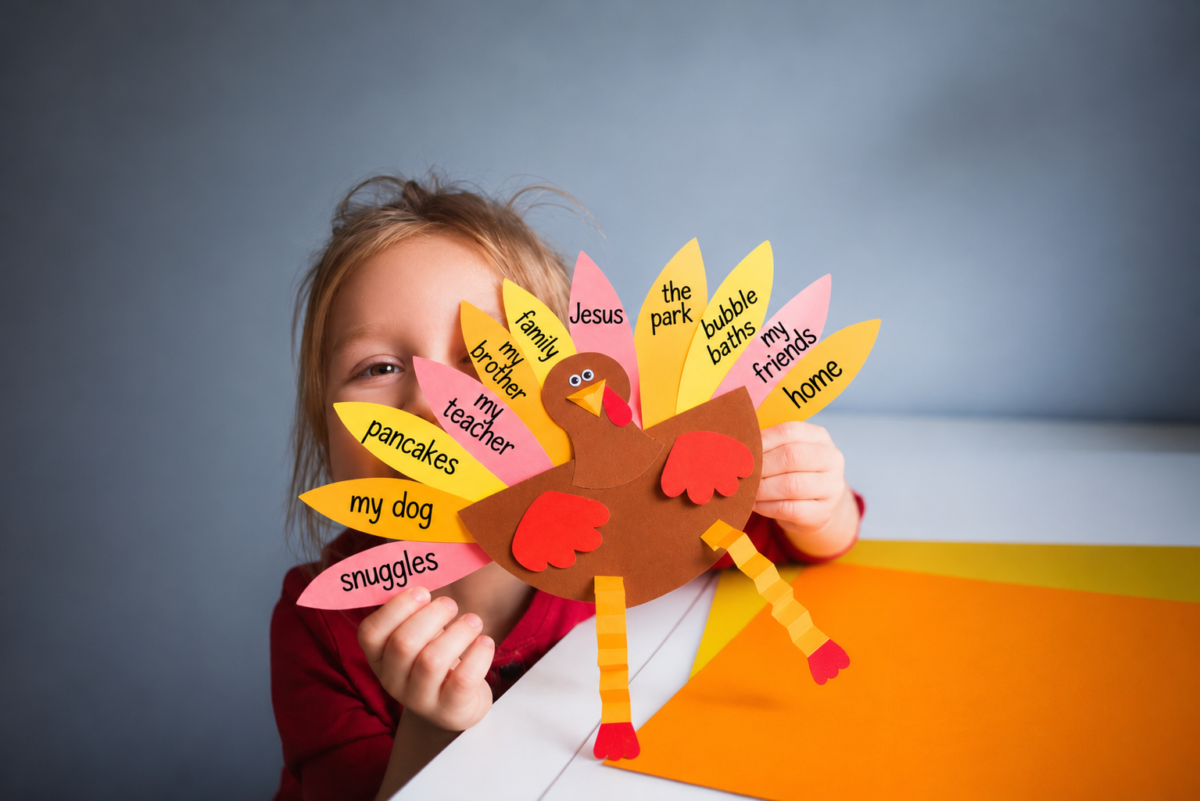
A fun, turkey-themed addition to your family’s November gratitude traditions. This is the kind of activity that can help get younger children excited about participating in conversations about thankfulness. Bring it out during family dinners and make it part of your countdown to Thanksgiving.
2. After Dinner Amusements: Gratitude
Sometimes getting kids to open up at dinner takes more than asking, “How was your day?” This little tin includes 50 prompts that encourage families to think about appreciation, kindness and ways to show gratitude. Keep it on the dinner table and pull out a card whenever the conversation needs a little inspiration.
3. Kids’ Daily Gratitude Journal
For kids who enjoy writing or having a little quiet time, a gratitude journal can be a great way to reflect on their day. This colorful journal includes guided prompts that encourage children to recognize the good things in their lives. It’s especially nice for older elementary-age kids who are ready to think beyond their favorite toys and activities.
4. Open the Joy Kindness Mission Cards
Gratitude is even better when we put it into action! These mission cards challenge kids to complete acts of kindness, from giving genuine compliments to helping their community. They’re a fun way to show children that being thankful isn’t just something we say; it’s something we can demonstrate through our actions.
You don’t have to wait until kids are older to introduce gratitude journaling. This beginner-friendly journal gives younger children space to reflect on the things they’re thankful for. Parents can help with writing or turn it into a quick activity before bedtime.
6. Gratitories: A Family Gratitude Game
If your family enjoys game nights, this gratitude-focused game offers another way to bring everyone together. It’s designed to make thankfulness a fun, interactive family habit rather than something you only discuss once a year.
A Few Books Worth Adding to Your Gratitude Collection
Books are one of my favorite ways to introduce bigger ideas to little kids. A good story can help children understand kindness, generosity and appreciation without feeling like they’re getting a lecture.
- The Thankful Book by Todd Parr: Bright, colorful illustrations and simple examples remind little ones that there are plenty of everyday things worth appreciating.
- Bear Says Thanks by Karma Wilson: A sweet story about friendship, sharing and discovering that everyone has something valuable to contribute.
- Thank You, Omu! by Oge Mora: A beautiful story about generosity, community and how kindness has a way of coming back around.
- The Thank You Book by Mo Willems: Elephant and Piggie fans will love this funny story about remembering to thank the people who matter.
- Those Shoes by Maribeth Boelts: Especially meaningful for older elementary-age kids, this story explores wanting what others have, recognizing what’s truly important and showing compassion.
And remember, you don’t have to buy these books! Check your local library, borrow from a friend or see what your child’s school library has available.