

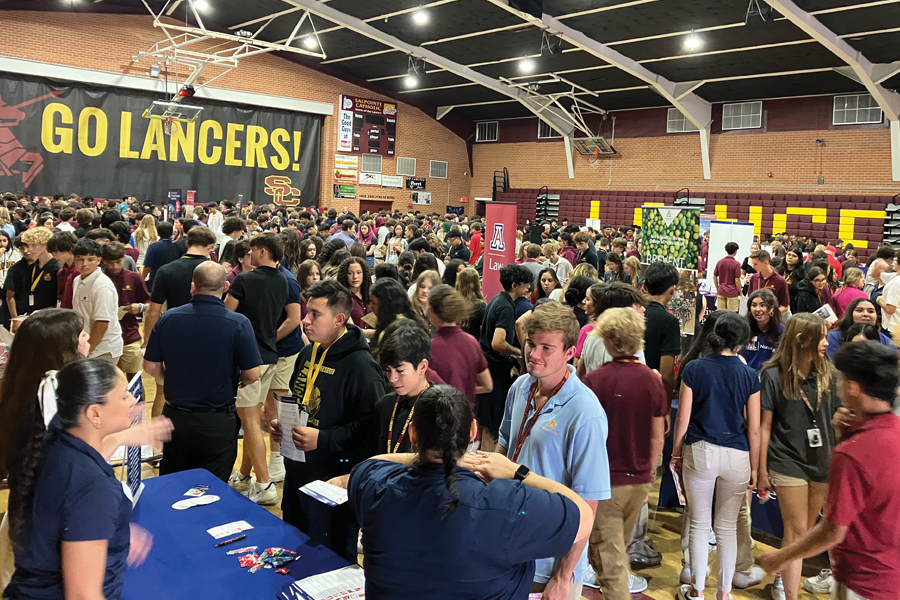
Imagine walking into a room abuzz with energetic people, all eager to talk about the college they represent and how it might fit into your teen’s future plans! Attending a college fair is more than rows of tables and brochures, it’s a great resource for students and families to get information about a wide range of options all in one place.
If this sounds daunting to your high school student, there are a few easy ways to help them prepare in advance to get the most out of the college fair experience.
Some students may already know where they want to go and what they want to study in college, while others are just beginning to explore. College fairs typically include college representatives from a wide variety of settings – large and small, public and private, close to home and far away. It’s a low-pressure environment for students to engage with adults, get familiar with college terms, and practice asking questions.
College representatives enjoy building connections with students and welcome their questions.
I’ve worked with several students who first learned about a college at a college fair, and later decided to apply and attend. In some cases, these colleges were as far away as Iowa, Maine and even Italy! Some reasons a college will appeal to a student is because they learn about a special program, unique aspect of student life, or engaging student activities that spark their interest. Students can also learn about application requirements, deadlines, as well as scholarships and financial aid, which can help determine what a college can offer and what it takes to be admitted.
Before attending a college fair, have your teen get an idea of which colleges will be in attendance and pick a few to talk with. It’s a good idea to have them come prepared with several questions to ask each college representative. For example:
- Curious about location? Ask the college representative to describe where their college is and what it’s like to live on or near campus.
- Wondering about size? Ask about the average class sizes for first- and second-year students.
- Concerned about cost? Ask what percentage of students receive merit-based scholarships or need-based financial aid.
Here are some other tips for navigating a college fair by high school grade level:
Freshmen – Time to start exploring!
• What classes and activities can you pursue now that can prepare you for college?
• Learn about different types of colleges and the programs they offer.
Sophomores – Time to start planning!
• What are colleges looking for in their applicants?
• How do programs and campus life set colleges apart from one another?
Juniors – Time to get serious!
• Get specific about majors, cost, campus size and location from colleges.
• Learn about scholarship opportunities and application timelines.
Seniors – Time for the final push!
• Talk to college representatives from the colleges where your teen has applied.
• Ask last minute questions and demonstrate interest. They may remember them when they see their application come across their desk!
If your child’s school does not host a college fair, consider contacting a local school to ask if they allow outside students to attend. You can also keep track of upcoming regional fairs at https://www.rmacac.org/college-fairs
Tara McCall is a College Counselor at Salpointe Catholic High School in Tucson, Arizona. Salpointe Catholic is a college-preparatory high school with a student body of 1375 students and 98% of graduates attend college. Salpointe Catholic offers their diverse student and parent population a holistic education in the Carmelite tradition.