
As parents, we are responsible for teaching our children many lessons – from saying “please” and “thank you” to the dreaded Pythagorean theorem. But very few things are as important as teaching your child how to drive.
According to the Centers for Disease Control, motor vehicle crashes killed roughly 2,800 American teens and injured another 227,000 last year. That means that every day about eight teens died due to motor vehicle crashes and hundreds more were injured.
So, how do you keep your teens safe behind the wheel?
Start the conversation
High school is a great time to learn about teen driving. While your child may not be eligible to drive yet, they will likely have friends who are either preparing to drive or already have their licenses. This is the time to establish rules related to driving with other teens.
Communicate your expectations and guidelines and make sure everyone is on the same page when it comes to boundaries and restrictions on riding in cars with other teen drivers. Consider developing a contract that specifically spells out the rules, responsibilities and consequences so your child is clear about expectations before they become an independent driver.
Enlist the experts to help
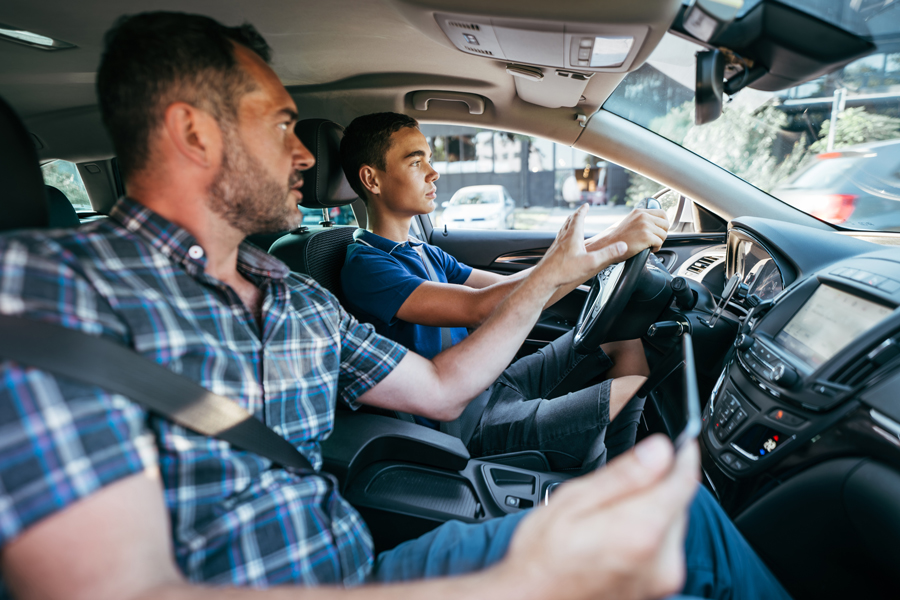
Learning to drive is not intuitive. It takes a lot of practice behind the wheel and a lot of education about the rules of the road. Begin by teaching your teen basic vehicle features like dashboard gauges and procedures like safe turning, proper lane changes and positioning, and controlled acceleration and braking. Other skills such as observation and planning, judgement and decision making require a great deal of time and practice to develop, too.
A reputable driving school will focus on competence and readiness, not just getting a student licensed. Every student learns differently, and a good driving school will consider your teens’ learning style and adapt to it.
At DrivingMBA, we take the necessary time to help students develop their skills and we partner with parents to make sure lessons don’t stop after your child leaves driving school. We provide honest and thoughtful feedback to both students and parents and administer a robust and comprehensive final evaluation to determine whether the student driver is really ready to be on the road as a solo driver.
Be a safe driving role model
Ask yourself the question, “Do I want my teen to emulate my driving behavior when they are behind the wheel?” Do you check your phone while driving, fiddle with the radio, change lanes without using your signal or roll through stop signs? Your student driver watches your every move, so drive the way you want them to drive. Once your teens are licensed, continue to drive with them to make sure they don’t pick up any bad habits.
At the end of the day, the most important thing about ensuring your teen is ready to hit the road is to be honest about their preparedness to drive. While your teenager may think they’re ready to be behind the wheel independently, it takes many hours of training and thousands of miles for them to become a competent and safe driver.
Maria Wojtczak is CEO and Co-founder of DrivingMBA. Her extensive experience in the field of adult learning and the design and facilitation of adult learning experiences and interventions has been instrumental in developing the research and evidence-based approach to driver training at DrivingMBA.