
If you’ve ever shopped for developmental toys for babies and toddlers, you’ve probably come across Lovevery and KiwiCo. Both companies offer thoughtfully designed toys, age-appropriate activities, and subscription kits intended to help children learn through play. But when comparing Lovevery vs. KiwiCo, which is actually worth the money?
As a mom of five, with another baby on the way, I’ve accumulated more toys than I care to admit. And after years of figuring out which toys my kids actually play with versus which ones end up forgotten in a basket, I’ve become much more selective about what I purchase.
Two brands I genuinely love are Lovevery and KiwiCo.
We’ve purchased quite a few products from both companies over the years, including subscription kits, individual toys, and secondhand finds. We certainly haven’t tried everything either brand offers, but we’ve tried enough to have some definite favorites.
And here’s the thing: I don’t think one brand is necessarily better than the other.
I absolutely love the Lovevery Play Gym (it’s oversized and has so many fun things to play with), but one of my favorite newborn accessories is KiwiCo’s Panda Crate tummy time pillow. We’ve enjoyed Lovevery’s developmental toys, but KiwiCo has also become a favorite for our older kids thanks to its engineering and STEM projects.
So rather than declaring a winner, I wanted to share what we’ve actually used, what we’ve loved, how the companies compare, and which products I think are worth considering for your family.
Lovevery vs. KiwiCo: What’s the Difference?
Both Lovevery and KiwiCo focus on learning through play, but they offer slightly different approaches.
Lovevery is best known for its developmental Play Kits, which include toys selected for specific stages of a child’s growth. The company also offers individual products, including its popular Play Gym, bath toys, music sets, school readiness materials, and early reading resources.
KiwiCo offers subscription crates for different ages and interests, starting with Panda Crate for babies and toddlers and continuing into science, engineering, art, and design projects for older kids, teens, and even adults.
Here’s a quick comparison:
| Feature | Lovevery | KiwiCo |
|---|---|---|
| Baby subscription | Play Kits | Panda Crate |
| Baby kit pricing | $88 per kit | Starting at $42 per crate |
| Toddler kit pricing | $132 per kit | Starting at $42 per crate |
| Baby delivery frequency | Approximately every 2 months | Every 2 months |
| Age range | Birth through approximately age 8 | Birth through adulthood |
| Individual toys available | Yes | Yes |
| Parent guides | Yes | Yes |
| Older-kid STEM projects | Limited compared with KiwiCo | Yes |
Prices reflect the products and subscription options displayed on the companies’ websites in November 2026. Pricing, contents, and subscription options may change.
Lovevery vs. KiwiCo for Babies: Newborn to 12 Months
During the first year, babies change so quickly. They go from staring at high-contrast images to reaching, grabbing, rolling, sitting, crawling, and eventually experimenting with how objects work.
Both Lovevery and KiwiCo do a wonderful job offering toys that encourage these early developmental skills.
But there are a few products from each company that have really stood out to me.
Lovevery Play Gym: My Favorite Baby Play Gym
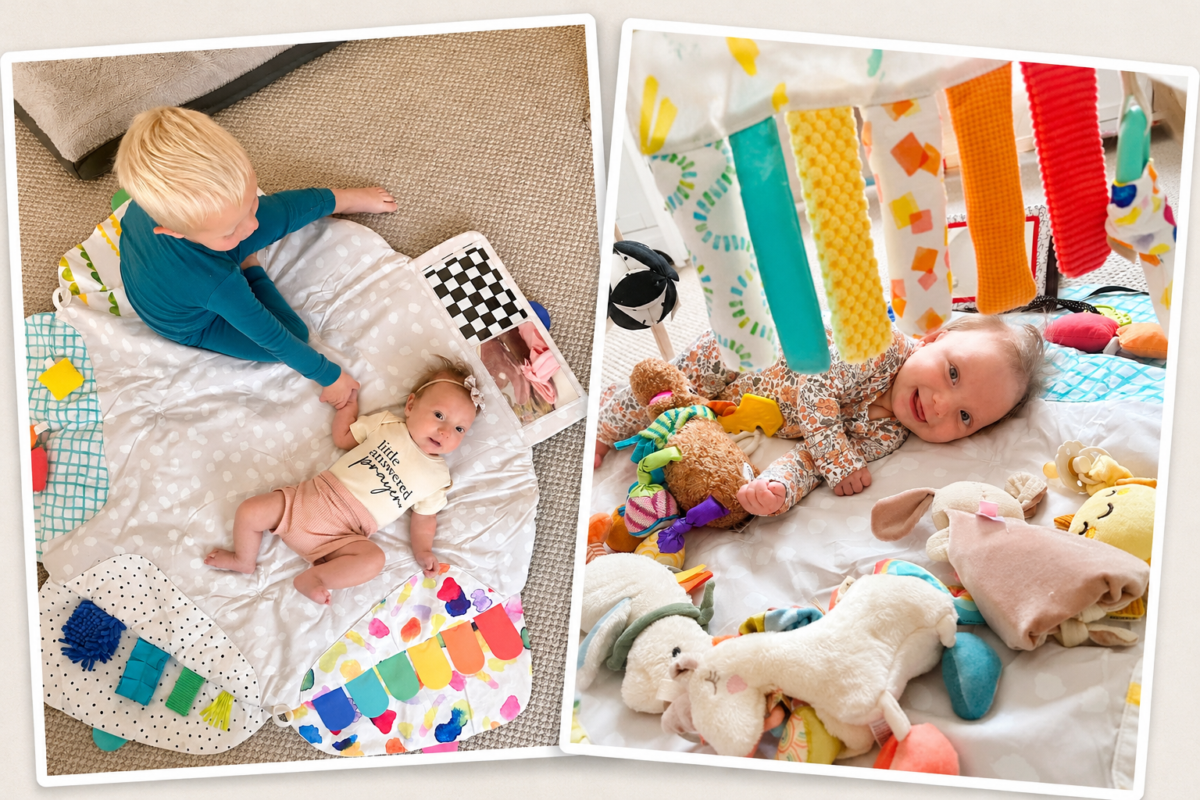
Of all the baby play gyms we’ve used over the years, the Lovevery Play Gym is my favorite.
I love the combination of the soft play mat, wooden activity arches, and interchangeable accessories. It offers so many different ways for babies to play during their first year.
Newborns can explore high-contrast images and practice visual tracking. As they grow, they can reach for hanging toys, practice tummy time, and eventually sit and explore the different activity areas.
It’s also one of those products that doesn’t immediately become useless when your baby reaches a new milestone.
At $150, it’s definitely an investment. But I think it’s one of the better baby items to consider putting on a registry.
And here’s something worth mentioning: I didn’t buy mine new.
My Lovevery Play Gym actually came from GoodBuy Gear, a retailer specializing in secondhand baby and children’s gear.
Because these products are made to withstand a lot of play, I think they’re particularly good candidates for buying used.
KiwiCo Panda Crate Tummy Time Pillow: A Newborn Favorite
While Lovevery wins my personal vote for a complete play gym, one of my favorite newborn accessories comes from KiwiCo’s Panda Crate.
The tummy time pillow is included in the 0–1 month “Let’s Bond!” crate, along with a tummy time mirror, black-and-white cards, a soft star lovey, and a grownup guide.
I love how simple and practical the pillow is for those early weeks when babies are just beginning to practice lifting their heads and building neck strength.
It’s a great example of why I don’t necessarily think parents need to choose one brand over the other. The Lovevery Play Gym and Panda Crate tummy time pillow serve different purposes, and both have earned a place among my favorite newborn products.
Comparing Lovevery and KiwiCo Baby Toys During the First Year
Both companies organize their baby toys around developmental stages, but the individual toys and activities differ.
KiwiCo’s Panda Crate delivers new activities every two months, while Lovevery’s Play Kits are also designed around specific developmental windows.
Here’s a look at some of the toys offered during baby’s first year.
| Age | KiwiCo Panda Crate | Lovevery Play Kits |
|---|---|---|
| Newborn–3 months | Tummy time pillow, mirror, black-and-white cards, rattles, crinkle book | High-contrast cards, visual tracking toys, sensory activities |
| 4–5 months | Soft rattle blocks, crinkle cloud, teething ring, wooden transfer discs | Toys encouraging grasping, reaching, and sensory exploration |
| 6–7 months | Wooden scarf keeper, shakers, play scarves | Sensory toys, early coordination and object exploration |
| 8–9 months | Coin box, bead maze, mirror puzzle, busy block | Toys supporting problem-solving and object permanence |
| 10–12 months | Wooden barn, stacking animals, tractor, animal cards | More complex manipulatives, coordination toys, and early pretend play |
The specific contents of each kit may change over time, but the overall concept is similar: provide toys that are interesting and developmentally appropriate without requiring parents to research every milestone.
Our Experience with Lovevery Play Kits
We own the Lovevery Looker Play Kit, designed for newborns, but we’ve also collected individual toys from several other kits over the years. Rather than purchasing every complete kit, I’ve often purchased individual Lovevery toys secondhand.
Part of that decision was practical. After having multiple babies, we already owned similar toys, and purchasing entire kits would have meant adding duplicates to our collection.
For example, from the Charmer Play Kit, we have the interlocking coins and rainbow book. From the Senser Play Kit, we have the rolling sound toy.
I love that we’ve been able to pick and choose individual toys without committing to every subscription box.
That’s not to say the complete Play Kits aren’t worth it.
For first-time parents, especially those starting with very few baby toys, they’re a convenient way to build a collection of age-appropriate activities.
But if you already have older children, a collection of baby toys, or simply want to be more selective about what you purchase, buying individual Lovevery toys secondhand is a great alternative.
Lovevery vs. KiwiCo for Toddlers: Ages 1–3
Once babies become toddlers, their toys change dramatically.
Suddenly, they’re interested in stacking, sorting, opening, closing, building, experimenting, and figuring out how everything works.
This is also when I think thoughtfully designed toys can really shine.
Lovevery Toddler Play Kits
Lovevery’s toddler Play Kits build on the developmental skills introduced during the first year, with increasingly complex toys that encourage problem-solving, coordination, language development, and imaginative play.
For example, the Babbler Play Kit, designed for approximately 13–15 months, includes toys that encourage toddlers to experiment with cause and effect, object permanence, and fine motor skills.
By 22–24 months, the Companion Play Kit introduces more sophisticated activities involving matching, sorting, and pretend play.
One thing I appreciate about Lovevery’s approach is that many of the toys are designed to be explored in different ways as children develop.
A toy that initially helps a younger toddler practice coordination might later become part of more elaborate imaginative play. Lovevery’s toddler Play Kits are currently listed at $132 each.
KiwiCo Panda Crate for Toddlers
KiwiCo’s Panda Crates also grow with your child, offering new activities every two months through approximately age 3.
Looking at the toddler collections, I especially appreciate the variety of activities. For example, the 24–25 month “Let’s Experiment!” crate includes a color station, color lab set, and color matching game. The 26–27 month “Let’s Sort!” crate features a rainbow block puzzle, bubble counter, and fishing game.
As toddlers get older, the activities become more involved. The 30–31 month “Let’s Create!” crate includes a playdough set, water play mat, and scribble crayons, while the 34–35 month “Let’s Figure It Out!” crate features puzzles and a jungle tree stacker.
What stands out to me is how KiwiCo incorporates different types of play into its collections. Rather than focusing exclusively on wooden toys or puzzles, the crates include opportunities for art, sensory exploration, early science concepts, and imaginative play.
Our Favorite KiwiCo Toddler Toys
While I love the concept of the subscription crates, some of our favorite KiwiCo toys have actually come from the company’s individual toy shop.
Two current favorites with our toddler (currently 18 months) are the Pop-Up Shape Sorter and the Load and Go Train Set.
I especially appreciate that the train set is small and manageable for little ones. Not every toddler needs an enormous train set with dozens of pieces. Sometimes a simple, appropriately sized toy is exactly what keeps them entertained.
The Pop-Up Shape Sorter has also been a favorite, offering a fun way to practice matching shapes, coordination, and problem-solving. If only it was easier to keep the shapes from wandering off!
We’ve collected so many great toys from these brands over the years, and I love seeing how much use they get.
Lovevery vs. KiwiCo for Preschoolers: Ages 3–6
As kids move into the preschool years, their interests expand beyond stacking and sorting.
Pretend play, imaginative building, creative projects, and early learning activities become a much bigger part of their day.
Both Lovevery and KiwiCo offer products for this age group, but KiwiCo’s subscription options begin branching into different interests.
Lovevery for Preschoolers
Lovevery continues offering developmental Play Kits for older toddlers and preschoolers, with activities that encourage problem-solving, language development, early literacy, and independence.
The company also offers other product categories, including:
- School Readiness
- Early Reader Club
- Music
- Bath toys
- Individual educational toys like the play kitchen
I appreciate that parents can explore specific developmental interests rather than relying exclusively on subscription boxes.
KiwiCo Koala Crate for Preschoolers
Once children outgrow Panda Crate, KiwiCo offers Koala Crate, designed for ages 3–6.
These crates focus on play-based learning, creative activities, and hands-on projects.
I like that KiwiCo’s subscription options begin to expand as children grow. Instead of simply making the toys more complicated, the company introduces different ways for kids to explore their interests.
Our Favorite KiwiCo Toys for Imaginative Play
Some of our favorite KiwiCo purchases have been toys that encourage our kids to use their imaginations.
Doctor Kit and Vet Kit: These have been wonderful additions to our pretend-play collection. Kids can take turns being the doctor, veterinarian, patient, or pet owner, creating their own little scenarios.
Pasta Play Dough Maker: I love toys that encourage creativity and hands-on play, and this is a fun way to combine pretend cooking with sensory activities.
Tap and Go Spiral Ball Drop: Sometimes the simplest toys are the most entertaining. This one encourages cause-and-effect exploration while keeping little hands busy.
Fort Builder: This has been such a hit in our house that we actually purchased two sets of fort-building pieces so our kids could build giant forts together.
I love that these types of toys encourage kids to play together rather than always needing separate activities. And unlike toys that have a very specific purpose, building toys and pretend-play sets can be used in countless different ways.
KiwiCo for Older Kids: One of My Favorite Differences
One of the biggest differences when comparing Lovevery vs. KiwiCo is what happens when children get older.
Lovevery’s age-based offerings currently extend through approximately age 8.
KiwiCo, on the other hand, has subscription options that continue into the teenage years and even adulthood.
Its different crates include:
- Panda Crate (0–36 months): Developmental toys and activities for babies and toddlers.
- Koala Crate (ages 3–6): Creative projects and play-based learning.
- Kiwi Crate (ages 6–9): Science, art, and hands-on projects.
- Atlas Crate (ages 6–12): Geography, culture, and world exploration.
- Doodle Crate (ages 6–12): Art and crafting projects.
- Tinker Crate (ages 9–12): Science and engineering.
- Maker Crate (ages 12+): Art and design.
- Eureka Crate (ages 12+): Engineering and design projects.
Our Experience with Tinker and Eureka Crates
We’ve purchased quite a few Tinker and Eureka kits over the years, and they’ve been so much fun for our older kids.
These aren’t simply toys you open and start playing with. They’re hands-on projects that encourage kids to build, experiment, problem-solve, and figure out how things work.
I especially appreciate having options for older children who might not be as interested in traditional toys anymore but still love making things.
And as a parent with children in several different age groups, it’s nice to find a company that offers something for nearly everyone.
Are Lovevery and KiwiCo Worth the Money?
Here’s something I wish more parents knew: You don’t have to pay full retail price to enjoy these toys.
While both Lovevery and KiwiCo offer beautiful, thoughtfully designed products, they’re not inexpensive. A single Play Kit or subscription crate can be a significant purchase, especially when you’re already buying diapers, clothes, and everything else babies and toddlers need.
But one of my favorite things about these toys is how well they hold up. We’ve had so many toys from these brands withstand years of play, which makes me much more comfortable purchasing them used.
My Favorite Tip: Buy Lovevery and KiwiCo Secondhand
My Lovevery Play Gym came from GoodBuy Gear, and we’ve purchased many individual Lovevery toys secondhand rather than buying entire kits.
You can often find individual toys, complete Play Kits, or subscription crates for significantly less than retail.
Some places worth checking include:
- GoodBuy Gear
- Facebook Marketplace
- Local children’s consignment stores and sales
- Parent buy-and-sell groups
- Online resale marketplaces
When shopping secondhand, check that the pieces are included, the toys are in good condition, and nothing has been recalled. For baby toys, pay particular attention to loose parts, damage, and whether the item can be cleaned appropriately.
One thing to keep in mind is that subscription kits sometimes contain multiple toys that serve similar purposes to items you already own.
If you’ve already accumulated toys through older siblings, gifts, or previous purchases, buying an entire kit might not make financial sense.
Instead, you can look for the individual toys that interest you most. And if you’re a first-time parent starting from scratch, a complete kit might be a convenient way to build a collection without having to research every developmental toy individually.
Lovevery vs. KiwiCo: Which Would I Recommend?
After years of purchasing toys from both brands, I don’t think parents need to choose one over the other. If I were building a baby registry today, the Lovevery Play Gym would absolutely make my list.
I’d also recommend exploring the Panda Crate newborn toys, especially the tummy time pillow, and considering whether a subscription would be useful for your family.
For toddlers and preschoolers, I’d encourage parents to explore the individual toys offered by both brands. Some of our favorite purchases have been items we selected separately rather than receiving through a subscription.
And for older kids, KiwiCo is a clear favorite in our house thanks to the variety of STEM, engineering, and creative projects available. Would I recommend purchasing both subscriptions at the same time? Not necessarily.
There’s plenty of overlap, and most families don’t need two boxes of developmental toys arriving every couple of months. But I would absolutely recommend exploring both brands, choosing the products that appeal to your child’s interests, and considering secondhand options.
Because at the end of the day, the best toys aren’t necessarily the newest or most expensive ones. They’re the ones your kids actually play with, return to again and again, and hopefully pass down to their younger siblings.
Disclosure: The toys discussed in this article were purchased by our family, including products purchased secondhand. We have not received compensation from Lovevery or KiwiCo for this review. All opinions are based on our personal experiences with the products we’ve used. We have not tested every product or subscription kit offered by either company.
RELATED:
Carousel Toy Library