
Every good book is a gift. All you have to do is open it and enjoy. But like Forrest Gump’s box of chocolates, it’s also a surprise: “You never know what you’re gonna get.”
You may find truth or beauty or warmth or laughter or all those things together, but in a way you didn’t expect.
Sometimes, that surprise involves physics and getting physical. Welcome to the wonderful world of movable books, a genre that includes three- and four-dimensional interactive books specially designed and assembled to delight and enlighten. These books tempt you to press, pull, push, pat and poke. They tease you to fan, lift, slide, spin and shuffle. They feed your sense of wonder.
Movables are made in several different ways — with pop-outs, pop-ups, transformations, tunnels, flaps, volvelles, pull-tabs and pull-downs — and most books combine them for maximum impact.
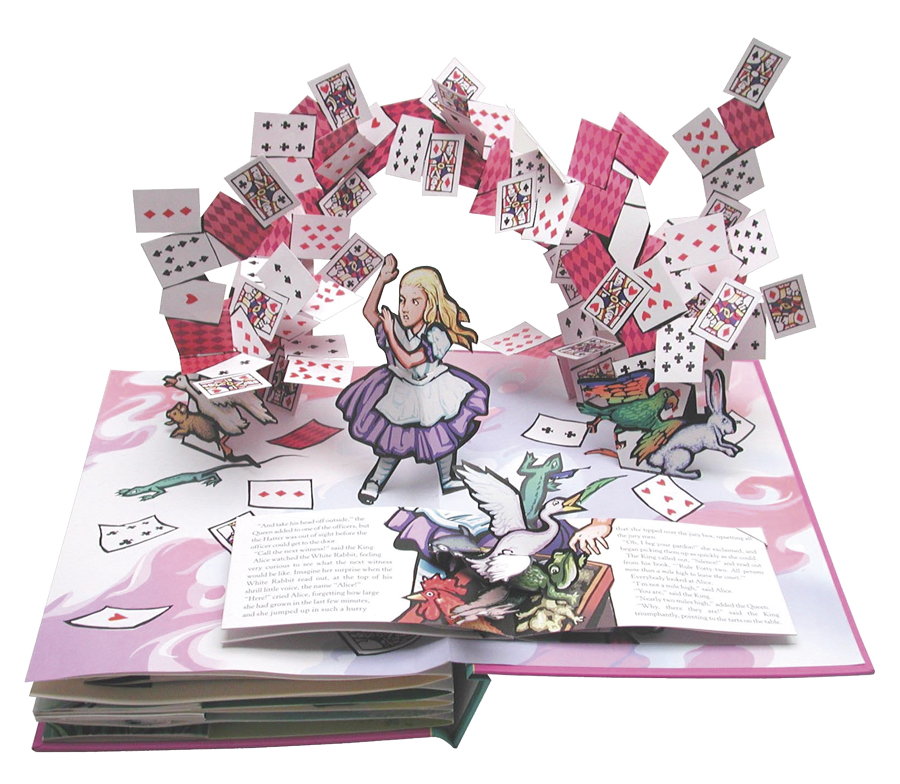
Pop-ups are the most eye-catching movable creations; complex origami-like sculptures that are engineered to unfold — often spectacularly — and refold as a book’s pages are turned. Movables come in all sizes, have fewer pages than a regular book and need extra care and supervision when in smaller hands.
RELATED: Noteworthy kids books by Brian Selznick
Movable features are the special effects of the print world. They are created by artists, often working with paper engineers, and they seem very high tech. In reality, they’ve been around for nearly 800 years and are still made mostly by hand.
The first known movable book was whipped up by monks around 1240, using a volvelle (concentric, independently maneuverable rings of paper secured by a grommet) to determine holy days. Later, lift-the-flaps drawing books were used to teach anatomy to aspiring physicians. It wasn’t until the very late 1700s that movable books were made especially for children. Over the years, new techniques and innovative presentations have continued to increase their wow factor.
Photographs, and even YouTube videos, do not do justice to these books. Like any work of art that appeals to the senses, they must be experienced in person. Happily, there is a smorgasbord of fiction and non-fiction available for anyone hungry for these treats.
But rather than name all the dishes, it might be easier to start with shout-outs to the top chefs who created much of this visual banquet. They each have their own remarkable specialties. I’ve listed just a few of their amazing titles, all guaranteed to satisfy any child’s pop-up cravings.
RELATED: Make your own pop-up books or cards
Robert Sabuda is called the “Prince of Pop-up Books.” Both innovative and old-school, his 4-D designs are like marvelously engineered magic tricks. He calls himself “an illusionist.”
• “Alice’s Adventures in Wonderland: A Pop-Up Adaptation”
• “Beauty and the Beast: A Pop-up Book of the Classic Fairy Tale”
• “The Dragon and the Knight”
• “The Little Mermaid”
• “Peter Pan”
• “The Wonderful Wizard of Oz: Pop-Up”
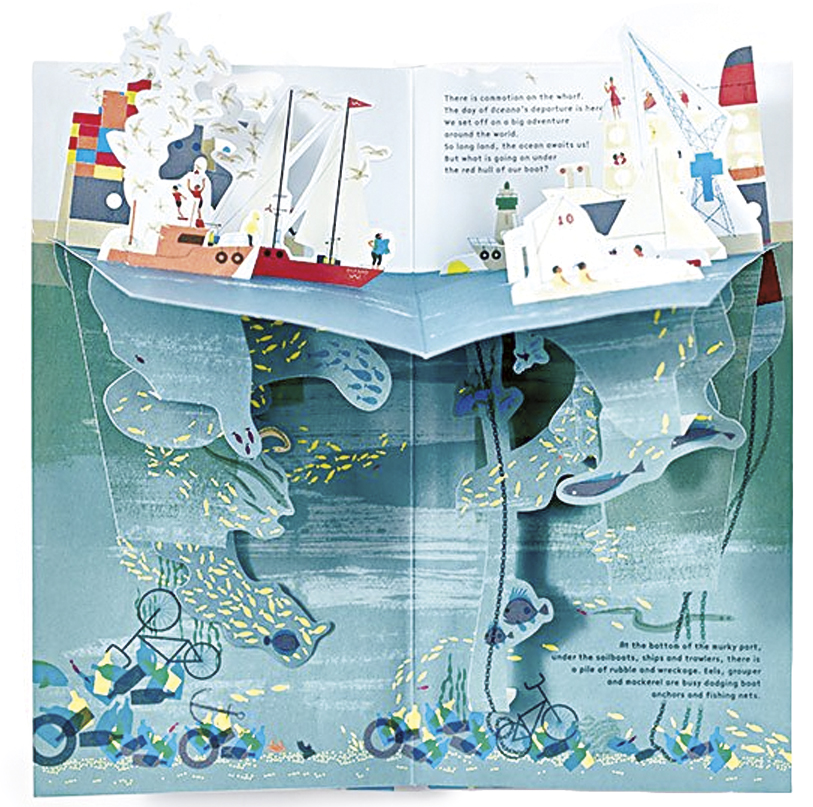 Anouck Boisrobert and Louis Rigaud collaborate to make award-winning pop-ups that show the growth of a village through time, chase a windblown hat through a city, and take a sailboat on an underwater tour of the world’s oceans in: “Popville,” “That’s My Hat!” and “Under the Ocean.”
 Philippe Ug is a French artist whose gorgeous 3-D birds, flowers and geometrics nearly leap off the pages: “Funny Birds,” “In the Butterfly Garden” and “Robots: Watch Out, Water About!”
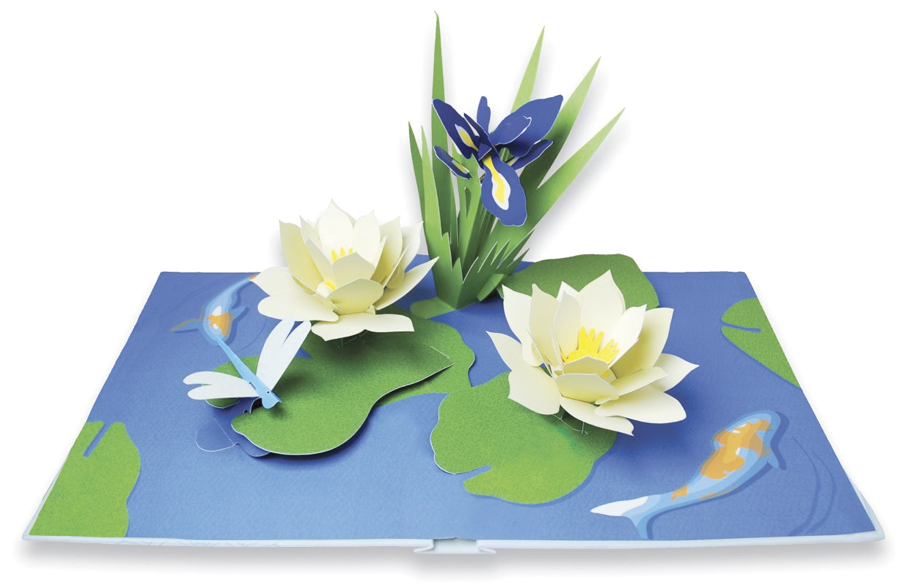 Ray Marshall designed these pop-ups to be left out on display: “Paper Blossoms: A Book of Beautiful Bouquets for the Table” and “Paper Blossoms, Butterflies and Birds: A Book of Beautiful Bouquets for the Table.”
 Kelli Anderson: “This Book is a Planetarium: And Other Extraordinary Pop-Up Contraptions” Anderson has created something — actually six scientific somethings — all functional, that you have to see to believe. Stunning.
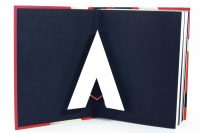 Marion Bataille: “ABC3D” A French graphic artist and illustrator, Bataille has produced a mind-bending interactive 3-D alphabet book in which the letters move and transform themselves.
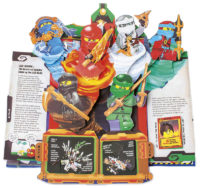 Matthew C. Reinhart is the pop culture pop-up guy. One of his “Star Wars” pop-ups was described by the New York Times like this: “Calling this sophisticated piece of engineering a ‘pop-up book’ is like calling the Great Wall of China a partition.” Harry Potter fans will like “Harry Potter: A Pop-Up Guide to Hogwarts,” to be released this fall.
• “Disney Princess: A Magical Pop-Up World”
• “Encyclopedia Prehistorica Dinosaurs: The Definitive Pop-Up” (with Robert Sabuda)
• “Frozen: A Pop-Up Adventure”
• “LEGO Pop-up: A Journey Through the LEGO Universe”
• “Mommy?” (with Arthur Yorinks and Maurice Sendak)
• “Star Wars: A Pop-Up Guide to the Galaxy”
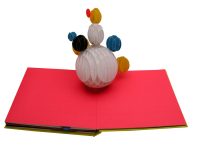 David A. Carter is known for his wild imagination and zany sense of humor as well as his ability to encourage readers’ interest in art concepts. His “Bugs” series has 25-plus volumes! Look for:
• “Alpha Bugs”
• “Autumn: A Pop-Up Book”
• “Bugs in a Box”
• “Five Cars Stuck and One Big Truck: A Pop-Up Road Trip”
• “I Love You: A Pop-Up Book”
• “One Red Dot”
• “600 Black Spots”
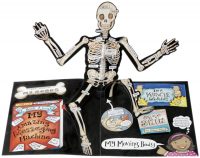 Jennie Maizels is the best-selling English illustrator who performs miracles with the human body, buildings, and the Bard in:
• “My Pop-Up Body Book”
• “Pop-Up London”
• “Pop-Up New York”
• “Pop-Up Shakespeare: Every Play and Poem in Pop-Up 3-D” (with the Reduced Shakespeare Co.)
https://www.raisingarizonakids.com/2018/02/love-in-the-time-of-kholera/