

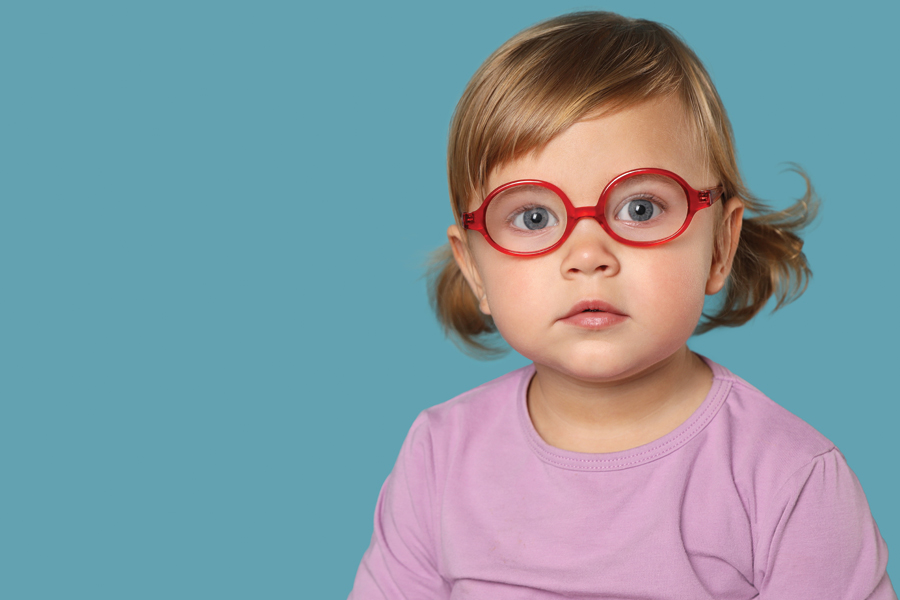
It is natural to wonder if your baby or toddler might need glasses. After all, young children cannot always explain what they see or how clearly they see it. Detecting vision problems early is important for healthy development, confident learning, and overall well-being. The challenge is that the signs are often subtle. Knowing what to look for can help you take action and support your child’s vision at the right time.
Signs Your Baby or Toddler May Need Glasses
Before children begin speaking, parents must rely on observation. Here are some common signs that suggest your child may need an eye exam:
• Frequent eye rubbing or squinting
• Limited or inconsistent eye contact
• Excessive tearing or crossed eyes
• Tilting the head or favoring one eye over the other
• Holding books or toys very close to the face
• Clumsiness or poor hand to eye coordination
If you notice your toddler squinting, struggling to recognize familiar objects, or showing delays in crawling and walking, vision may be the reason. Poor depth perception can affect motor skills just as much as it can affect reading readiness. A pediatric eye doctor can help determine whether glasses or another treatment is needed.
What Every Parent Should Know About Early Vision
Vision disorders in babies and toddlers are more common than many parents realize. Conditions such as strabismus (crossed eyes) and amblyopia (lazy eye) may not always be obvious. Warning signs include sensitivity to light, trouble tracking moving objects, or one eye that seems to “wander.” These concerns can develop in the first few years of life, which are critical for visual development.
The American Optometric Association recommends a baseline exam between six and twelve months of age. Another exam should take place between ages three and five, followed by a visit before starting school. Once school begins, annual exams are recommended. These appointments ensure that problems are detected early when treatment is most effective.
Understanding Astigmatism in Young Children
Astigmatism is one of the most common reasons children need glasses. It occurs when the front surface of the eye has an irregular shape, more like an oval than a circle. This irregularity causes blurry or distorted vision. Children may be born with astigmatism, and it can affect both learning and coordination.
The good news is that glasses often correct astigmatism and allow normal visual development to continue. If your child rubs their eyes frequently, squints, or struggles to see clearly, an eye exam can determine if astigmatism is the cause.
Choosing the Right Glasses
Today’s children’s eyewear is designed for comfort, durability, and style. Frames come in lightweight, flexible materials that are gentle on small faces. Straps or bands can help keep glasses in place for very young children. Many parents are surprised at how quickly kids adapt to glasses when the improvement in vision is immediate and clear.
Supporting Healthy Eyesight Naturally
While glasses are the best treatment for many eye conditions, lifestyle habits also make a difference. Encourage outdoor play, which studies show may reduce the risk of nearsightedness. Limit screen time, especially before bedtime, and encourage frequent breaks when screens are used. Make sure your child eats a balanced diet rich in fruits and vegetables, gets plenty of rest, and stays hydrated. These small choices support eye health as well as overall wellness.
The Bottom Line
There is no single “average age” when children begin wearing glasses. Some need them as infants, while others may not until elementary school or later. What matters most is that parents remain alert to the signs and schedule regular comprehensive eye exams.
Early detection can mean the difference between a child struggling to keep up in school and one who thrives. Glasses are more than just lenses—they are tools that help children explore, learn, and engage with the world around them. With the right support, every child can see a clearer, brighter future.
Dr. John Lahr is the medical director at EyeMed Vision Care, which administers Delta Dental of Arizona’s DeltaVision plans, and 50 years of experience in eye care delivery and vision care.