

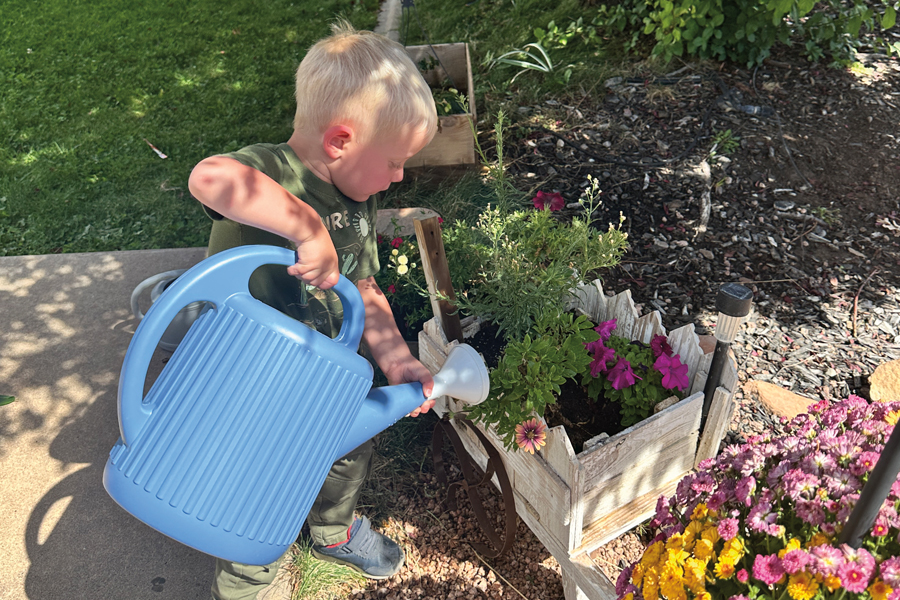
When we moved from the heat of Phoenix to the cooler temperatures of the White Mountains, one of the first things we wanted to do was start a garden. It took a few years of trial and error to figure out what worked in different light, soil, and temperatures—but it’s become a hobby we truly love.
Gardening with kids rarely looks like the peaceful, Pinterest-worthy scenes we imagine. It’s messy. The baby wants to eat the dirt. Soil gets spilled in the house. Plants get overwatered—or forgotten entirely. A late freeze sneaks in at the end of May. Our dog happily “helps” by digging where he shouldn’t, elk wander through and snack on our plants like it’s their personal buffet, kids pick things too early trying to be helpful, and bugs always seem to show up uninvited.
And yet—gardening with kids has become one of our favorite things to do together from spring through fall. Here are five lessons our kids have learned along the way.
- Patience. In a fast-paced world where kids are used to instant results, the garden teaches patience in a very tangible way. You can’t rush a seed. You can water it, give it sunlight, and check on it daily—but growth happens on its own timeline. At first, this can be frustrating. Over time, kids learn that good things take time and consistency, even when progress isn’t immediately visible.
- Responsibility. Gardening also builds responsibility and accountability. When a child is given “their” plant, something shifts. They remember to water it. They notice when the leaves droop. They feel proud when a sprout finally pushes through the soil. Plants depend on them—and kids often rise to that responsibility in ways that might surprise you.
- Not Giving Up (and Learning From Failure). Of course, there’s also garden flops. Not every plant survives. Bugs can be relentless. Birds pick off berries. Weather is unpredictable. Sometimes the elk win. Gardening gives kids a space to experience disappointment and build resilience—to problem-solve, adapt, and try again. Instead of giving up, they learn that setbacks are part of life, not the end of the story.
- Accomplishment. There’s a huge confidence boost that comes from growing something successfully. Watching kids harvest food they planted themselves gives them a deep sense of accomplishment. Gardening may be hard work, but it shows them that effort matters—and they love telling anyone who will listen about the fruits and vegetables they grew themselves.
- Connection to Food. One of the most unexpected benefits has been the connection to food. When kids help grow what ends up on their plates, vegetables suddenly feel less intimidating. Gardening has made our kids far more curious about what we eat and eager to help with menu planning and cooking—because food grown in our own backyard feels different.
In addition to all of that, gardening naturally sparks curiosity and learning. Kids ask questions we don’t always have answers to: Why do bugs like certain plants? How do roots know to grow downward? Why does soil matter so much? Without realizing it, they’re learning about biology, life cycles, ecosystems, and even math—counting seeds, spacing plants, measuring growth. It’s science and sensory play wrapped into one messy, dirt-covered experience.
This summer, we’re planning tomatoes, peppers, strawberries, zucchini, asparagus, artichoke, onions, leafy greens, herbs—and whatever else we can manage. It won’t be perfect. Something will fail. Something will thrive. And that’s exactly the point.
Gardening with kids isn’t about perfect rows or big harvests. It’s about dirt under fingernails, lessons learned slowly, and the confidence that comes from nurturing something from seed to table—together.