
Presented By the Children’s Museum of Phoenix
Back-to-school time tends to pull our minds straight to homework, numbers, sight words, and the endless list of supplies. Yet a huge chunk of a child’s communication growth shows up long before the first classroom, it starts on the living-room floor, in the sandbox, wherever play happens.
Play keeps language in motion. Without anyone announcing a lesson or trying to teach, kids are naming colors and shapes, describing what they see, and narrating what they’re making as they go. Toss in a playmate and the talking ramps up: they compare ideas, ask more questions, explain what they’re doing and figure out how to keep the game going together.
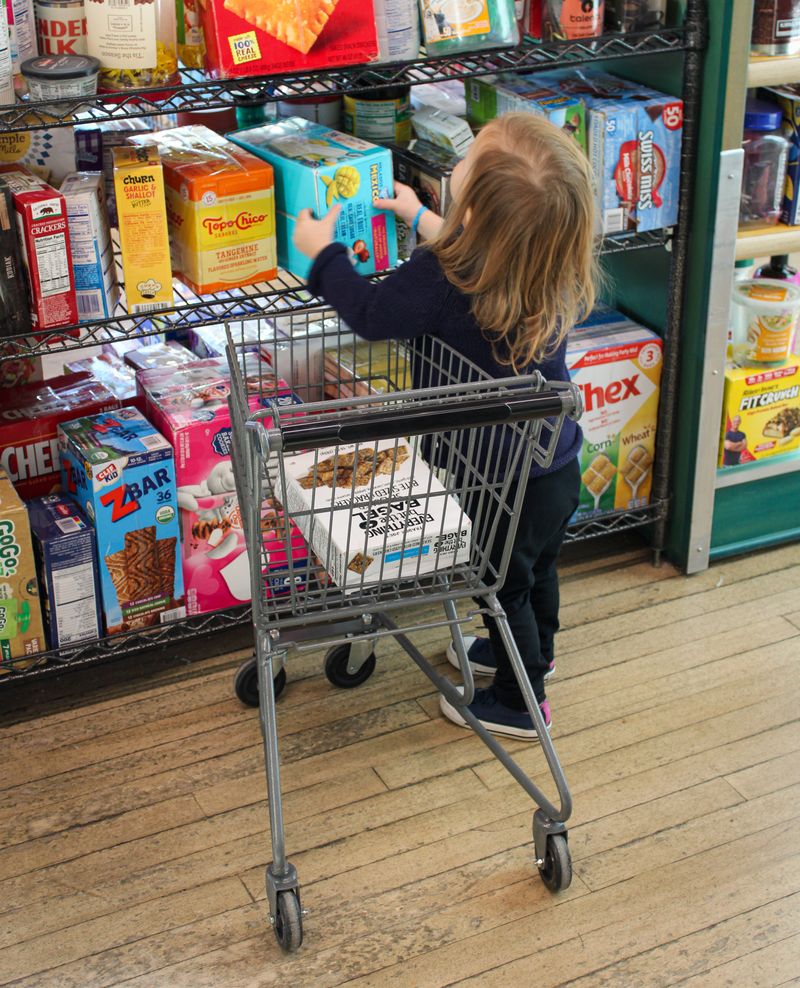
Children borrow from what they’ve watched in real life sceneries. Like mom or dad at the grocery store—picking out food items from a list, putting items on the conveyor belt, the cashier scanning and chit chatting, and the routines grown-ups repeat. In a game of ‘grocery store’ one child becomes the cashier, sliding imaginary items past an invisible scanner, while the other unloads the cart and waits their turn. From there, the talking really comes to life–what they “bought,” what it “costs,” who gets to be the cashier next, what comes after checkout. At the Children’s Museum of Phoenix, The Market is built for this sort of role play, with pretend carts, food scales, and checkout stations that make those
conversations easy to start and hard to stop.
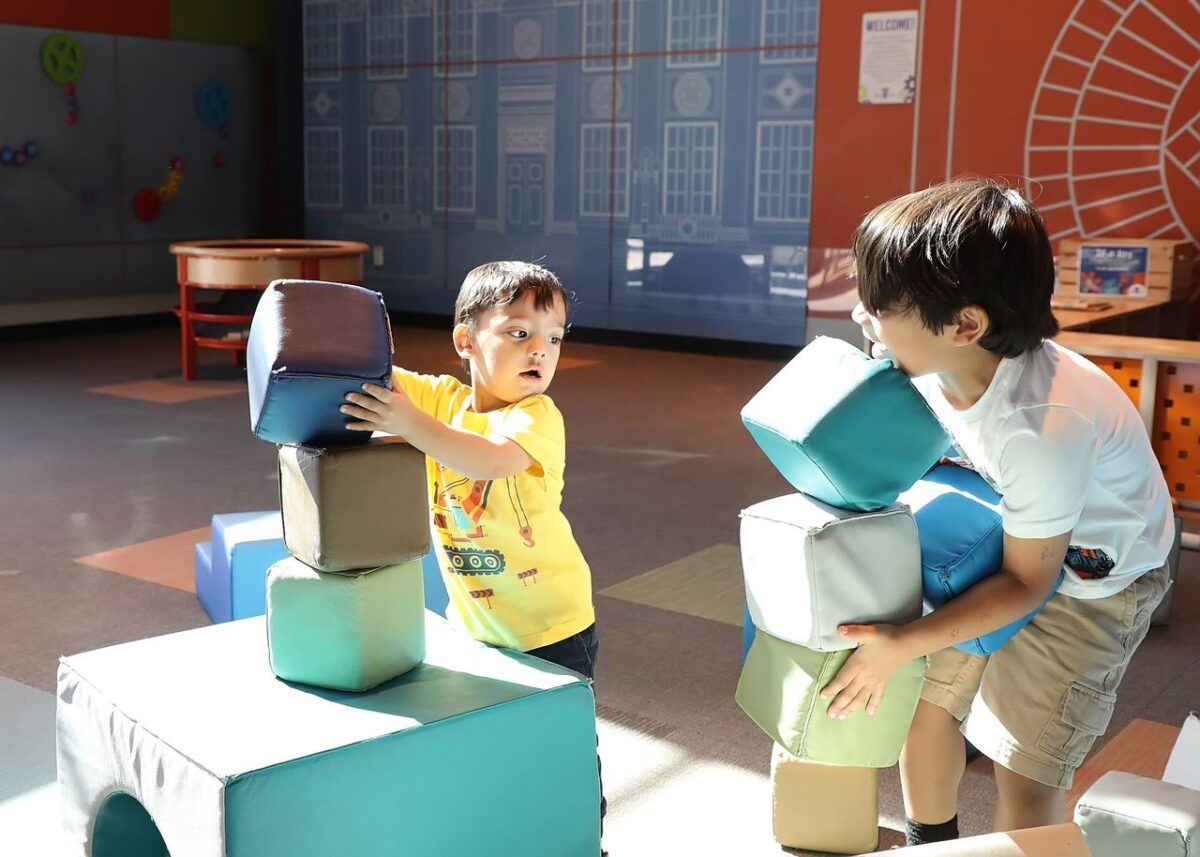
Building projects stir up language in a different way, quieter but just as rich. Hand a child a heap of blocks and you’ll hear words like under, beside, taller, shorter, across, and beneath show up naturally as they experiment. Mix in counting and color sorting and suddenly you’ve got a simple activity doing serious work. You can nudge the play with small prompts, “Can you build me a hospital?” or “Can you stack all the red blocks?”, and then watch them run with it. With a friend nearby, they negotiate, solve
little problems, choose pieces together, and decide what the next build should be. BlockMania! at the Museum has piles of blocks ready for anything kids can picture.
Imaginative play stretches things even further. At home, a tub of old Halloween costumes can turn a child into a princess, a doctor, a vet, or simply “a grown-up.” Often, they’ll give you a backstory without being asked, explaining who they are, where they’re headed, and what they’re doing right now.
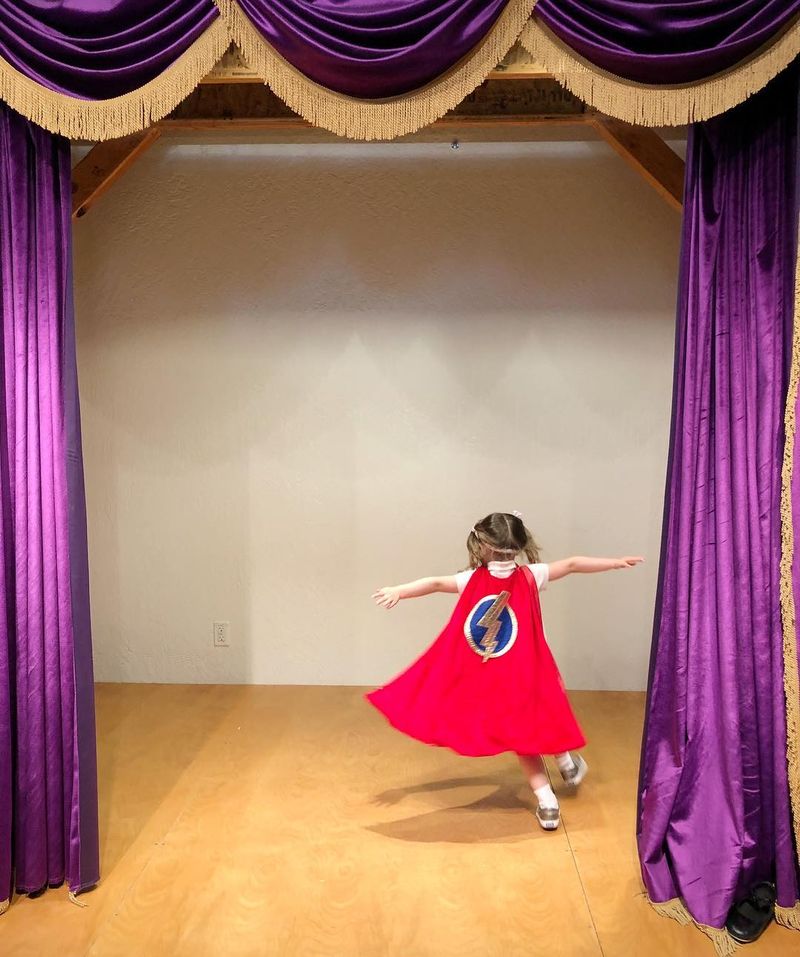
That open-ended pretending creates a steady stream of chances to put thoughts into words. In the DramaRama exhibit, costumes and props give kids a jumping-off point for characters and stories. Who are you today? Where are you going? And then what? Each new plotline is another round of practicing language on a stage made for imagination.
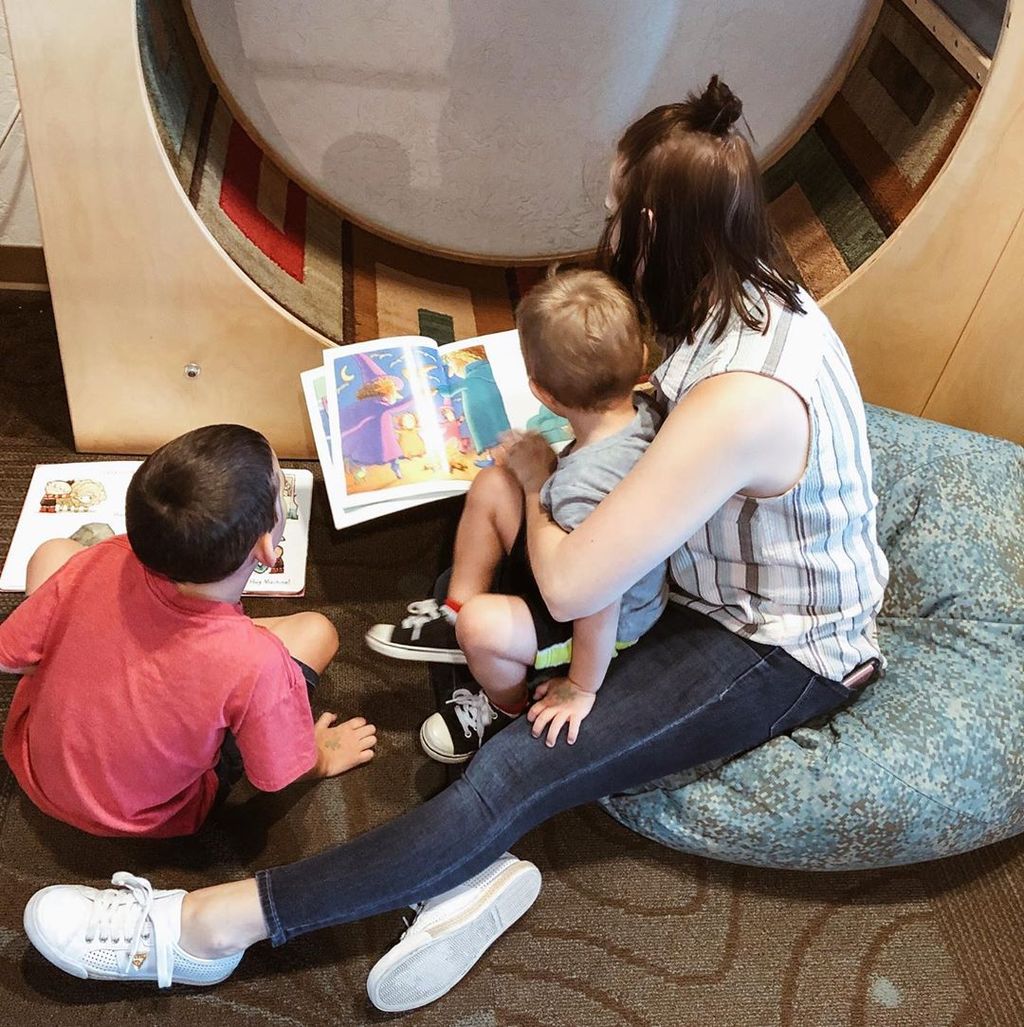
And yes, reading matters too. It doesn’t look like a traditional kind of play, but reading introduces children into language they don’t hear in everyday conversation. Ask a teacher which students tend to be stronger readers, and you’ll often hear the same answer: the ones who read at home. Stories also let imagination run wild–dragons that eat tacos, sneaky rabbits, construction trucks that come to life at bedtime. One study estimated that kids who hear just one book a day are exposed to about 290,000 more words by age five than kids who are rarely read to. That’s from just one book a day! Spending 20-
30 minutes each day reading increases vocabulary and builds the language base children rely on when they start reading and writing themselves. Plus, it encourages a love of reading.
The simplest play can be doing far more than it looks like from across the room. Stacking blocks, pretending to shop, inventing a story are firing neurons and building pathways in the brain. They’re playing but they’re also picking up vocabulary, practicing communication, working through problems, and learning how to move through the world with other people.
Whether you stop by the Museum after school, spend a weekend wandering around, or bring a little one well before their first preschool drop-off, those playful moments are laying down the groundwork for learning. Play can look easy, but what children pull from it is anything but.
TRY IT AT HOME
Turn everyday play into real conversation without making it sound like a quiz. When your child is playing start using prompts like “Tell me about what you’re building,” “What do you think happens next?” or “What should we pretend this is?” Then let them tell you more–you’re simply giving them more reasons to keep talking, imagining, and telling you what’s in their head.
PLAY & LEARN ALL YEAR LONG
Want to put that play into action? The Children’s Museum of Phoenix has three floors of hands-on experiences for children from birth through age 10. General admission is $19 per person, seniors 62+ are $18, and children under age 1 get in free. If your family wants to make play part of the regular routine, annual memberships begin at $149 for one adult and one child, with other options for bigger households. Membership includes unlimited admission for a full year plus extra benefits, an easy way to return to play, and learn, again and again.
Plan your visit to the Children’s Museum of Phoenix.